As global communication networks continue expanding into remote regions, more base station towers are being built in deserts, semi-arid areas, and other harsh environments where traditional protection methods are often insufficient. For telecom operators, maintaining reliable communication infrastructure in desert regions is challenging. Strong winds, airborne sand particles, and frequent sandstorms can create long-term pressure on outdoor equipment, increasing maintenance requirements and affecting operational stability.
According to the World Meteorological Organization (WMO) Sand and Dust Storms Report, sand and dust storms are especially common in arid regions such as the Arabian Desert and can impact infrastructure, transportation, and industrial operations. Therefore, telecom companies need reliable protection solutions that reduce wind-driven sand movement and create a safer operating environment around critical equipment. This article explains why base stations require protection, how windbreak and sand barrier systems work, and how windbreak nets improve protection against extreme desert conditions.
Part 1: Why Do Base Station Towers Need Protection in Desert Environments?
How do sandstorms affect telecom towers and outdoor equipment?
Sandstorms are one of the biggest environmental challenges for communication infrastructure located in desert regions.
During a sandstorm, large amounts of airborne particles move rapidly through the surrounding environment. Over time, continuous exposure to sand can affect outdoor equipment areas, including communication cabinets, power systems, cooling units, and other supporting facilities.
The main risks include:
- Increased sand accumulation around equipment areas
- More frequent cleaning and maintenance requirements
- Faster aging of exposed components
- Reduced reliability of outdoor infrastructure
For remote telecom sites, these problems can become more serious because maintenance teams may need to travel long distances to access the equipment. Preventive protection is therefore often more cost-effective than frequent repairs. A properly designed sand protection system helps reduce the amount of wind-driven sand reaching the tower area, creating a cleaner and more stable environment for long-term operation.
Part 2: How to Protect Base Station Towers from Wind and Sand?
The most effective solution for reducing wind and sand impact around desert base stations is installing a professional HDPE windbreak net system.
A windbreak net is an outdoor protection structure manufactured from high-density polyethylene (HDPE). Unlike traditional solid barriers, it does not completely block airflow. Instead, the specially designed mesh structure reduces wind speed, changes airflow patterns, and decreases the amount of sand transported by strong winds. The principle is similar to creating a protective buffer around the communication site. When wind passes through the mesh, the airflow becomes weaker and less capable of carrying heavy sand particles. This controlled reduction in wind energy is the basic principle behind modern windbreak net systems for sand control, which are widely used in desert and infrastructure protection projects.
For telecom projects, this approach provides several important benefits:
1. Reducing Direct Sand Impact on Communication Facilities
The primary purpose of a windbreak net is to reduce the amount of wind-driven sand reaching sensitive areas. In desert environments, sand movement is continuous rather than occasional. Even small particles can gradually accumulate around outdoor infrastructure when there is no effective protection. A properly designed windbreak system helps create a cleaner and more stable area around the base station, reducing environmental pressure on equipment and supporting facilities.
2. Maintaining Airflow While Controlling Sand Movement
One of the biggest advantages of HDPE windbreak nets compared with solid barriers is airflow management. Communication facilities often require ventilation to maintain normal operation. A completely closed structure may create unwanted turbulence or affect air circulation around equipment. Windbreak nets provide a balanced solution by reducing wind energy while allowing controlled airflow through the mesh structure.
3. Providing Continuous Protection for Remote Telecom Sites
Many desert base station towers are located in remote areas where maintenance access is difficult and expensive. A permanent wind and sand protection system reduces dependence on frequent manual cleaning and helps operators maintain more stable infrastructure performance over the long term.
Part 3: What Is the Best Material for Windbreak Nets in Desert Environments?
HDPE is a thermoplastic material known for its excellent outdoor performance. Unlike ordinary plastic mesh materials that may become brittle after prolonged exposure to sunlight and weather conditions, high-quality HDPE products can maintain their strength and flexibility over long periods.
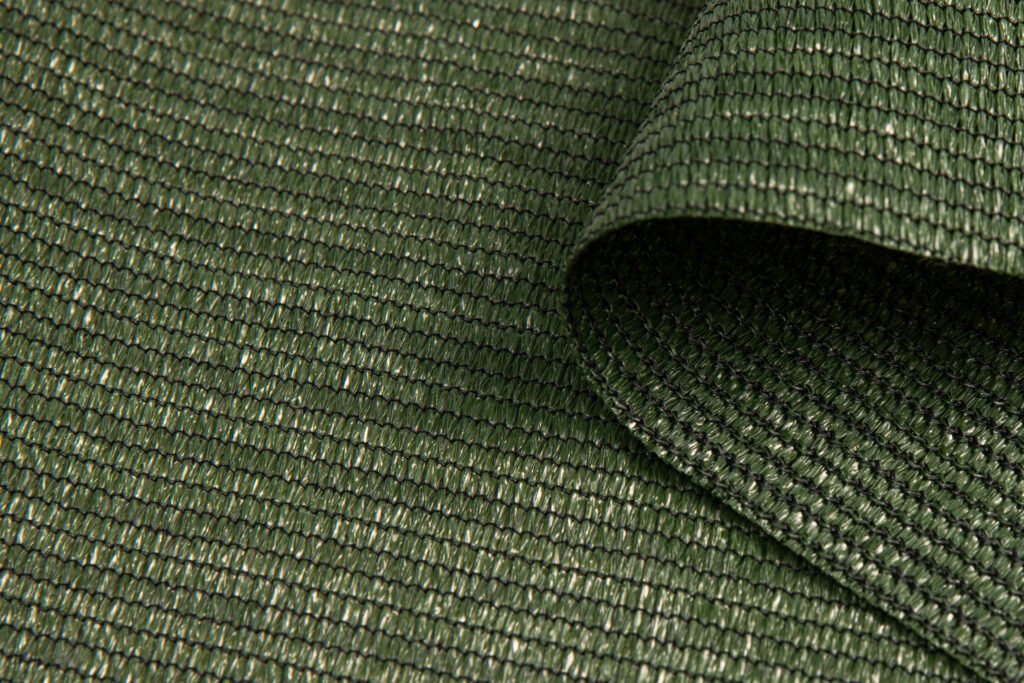
For base station towers and desert infrastructure, the advantages of HDPE are mainly reflected in several key areas.
- Excellent UV Resistance for Long-Term Outdoor Use
- High Tensile Strength to Withstand Strong Wind Conditions(Up to Level 17 winds)
- Flexible Structure for Effective Wind and Sand Control
- Resistance Against Moisture and Environmental Degradation
| Material | Advantages | Limitations for Desert Applications |
|---|
| HDPE | UV resistant, strong, flexible, long service life | Requires professional manufacturing for best performance |
| PVC | Waterproof and widely available | May become less flexible under extreme temperatures |
| Polyester | Good tensile strength | Lower resistance to long-term outdoor exposure compared with HDPE |
| Metal Mesh | High strength | Heavier, prone to corrosion, more difficult installation |
Part 4: Base Station Towers Wind and Sand Protection Case Study
Base station towers located in desert regions are often exposed to strong winds, airborne sand, and harsh outdoor conditions for extended periods. Without effective environmental protection measures, wind-driven sand can accumulate around infrastructure areas and increase maintenance requirements over time.
For this project, the communication site was located in a desert environment where a reliable wind and sand protection solution was required to improve the stability of the surrounding area. The objective was not only to reduce direct sand impact but also to create a more suitable operating environment for long-term infrastructure use.
1. Selecting Suitable Materials and Preparing Technical Verification
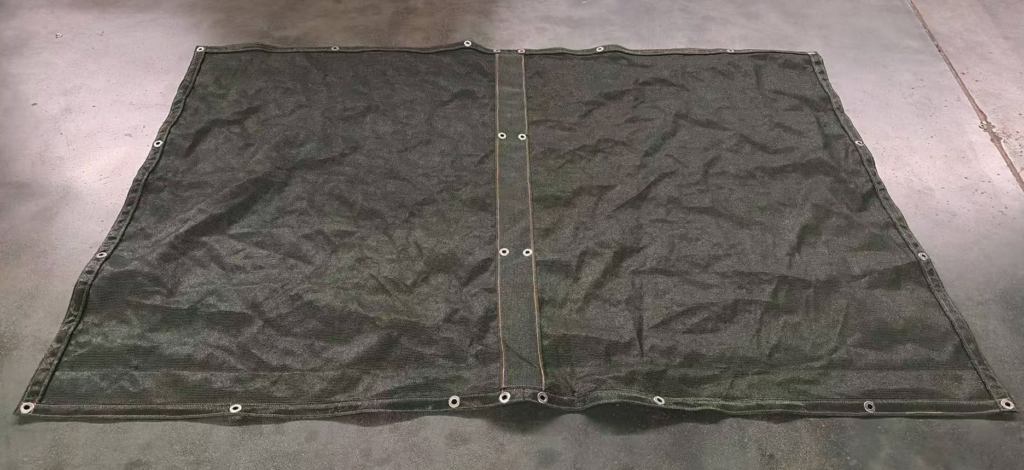
For desert protection projects, material performance is one of the key factors determining long-term reliability. The sand barrier net needs to maintain stable performance under continuous outdoor exposure, including strong sunlight, wind, and sand erosion.
Based on the project requirements, Young Shade Sail provided a complete technical solution package, including product specifications, sample information, testing documents, and qualification materials to verify product performance before application. This process ensured that the selected material could meet the requirements of a long-term outdoor protection system.
2. Optimizing the Design According to Installation Conditions
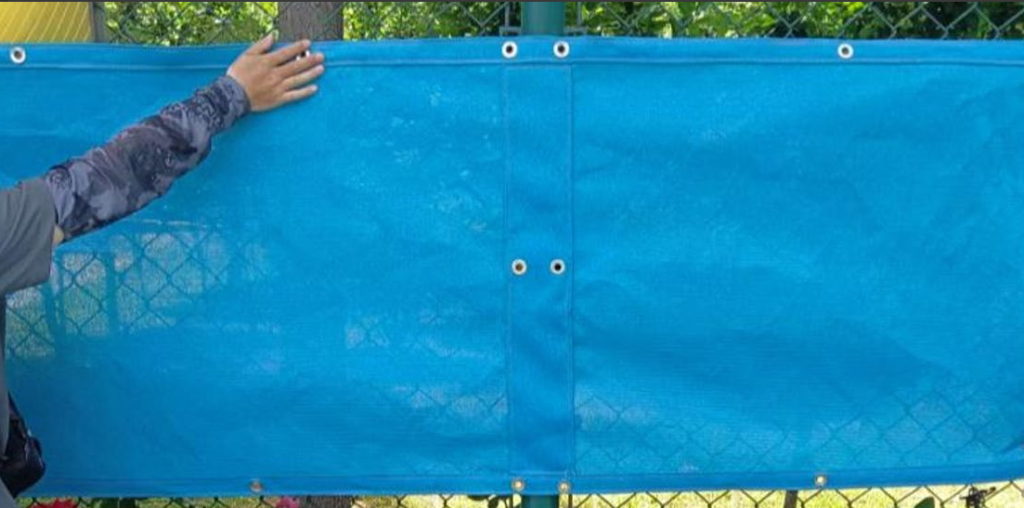
During the project development stage, Young Shade Sail did not only focus on the mesh material itself but also optimized the overall installation structure.
The solution included improvements to reinforcement zone positioning, connection methods, and accessory selection to ensure better load distribution and structural stability. For example, the reinforced middle section of the mesh was aligned with the supporting posts to improve force balance, while stainless steel fixing accessories were selected to provide reliable connections between the mesh and supporting structure.
The installation method was also optimized through detailed guidance, including pre-stretching the mesh before installation to reduce wrinkles and prevent sagging, followed by sequential fixing through each connection point to maintain consistent tension.
3. Creating a More Stable Protection Environment for Base Station Towers
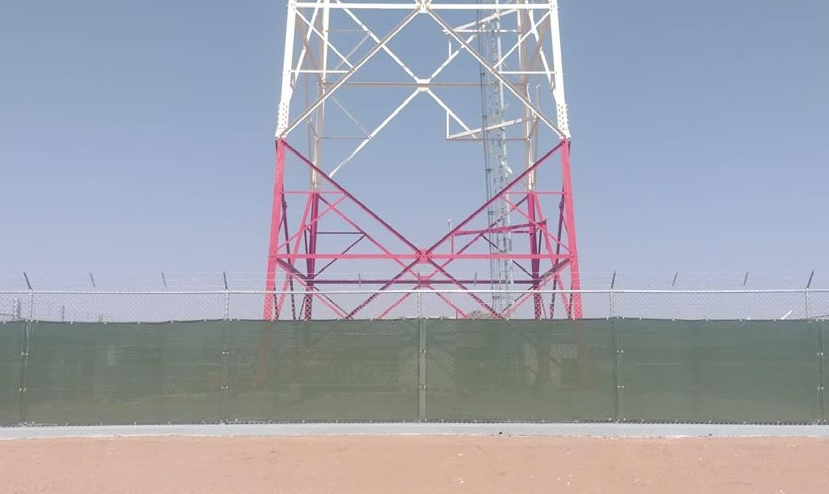
After the customized sand barrier net system was applied in a desert environment with extreme wind conditions reaching up to Level 17, the solution effectively reduced the impact of wind-driven sand around the base station area and created a more stable operating environment for communication infrastructure.
Through customized design, optimized installation methods, and quality control procedures, the project achieved a more reliable wind and sand protection solution for desert communication infrastructure. The completion process included material qualification checks, connection point inspections, and installation quality verification to ensure the system met the required standards.
For remote communication infrastructure, this type of wind and sand protection solution helps reduce maintenance pressure, improve site stability, and provide longer-term protection for base station towers operating in challenging desert environments.
Part 5: Which is the Best Wind and Sand Protection Net Manufacturer?
Young Shade Sail is a professional factory manufacturer specializing in HDPE outdoor protection products, including windbreak nets, sand barrier systems, shade fabrics, and customized outdoor solutions. With years of manufacturing experience and global project experience, the company provides customized wind and sand protection solutions for customers in different climates and application environments.
- Professional Manufacturing: Large-scale production with strict quality control ensures uniform mesh structure, stable tensile strength, and high durability. Young Shade Sail operates its own manufacturing facility and controls the production process from raw materials to finished products. This factory-direct model allows better control over product quality, delivery time, and customization requirements.
- Engineering-Grade Materials: We use premium HDPE raw materials, offering excellent UV resistance, long service life, and consistent performance even in harsh conditions.
- Custom Manufacturing Capability: We operate a self-owned factory equipped with the world’s largest and most advanced CNC machines, making it the largest wire mesh production facility globally. Our fully automated production lines allow us to customize windbreak nets in any size and quantity, meeting the demands of large-scale projects with precision and efficiency.
FAQ:
What is the best solution for protecting base station towers from sandstorms?
HDPE windbreak nets are one of the most effective solutions because they reduce wind-driven sand movement while maintaining airflow around communication facilities.
How long do HDPE windbreak nets last in desert environments?
The service life depends on material quality, installation conditions, and environmental exposure. Young Shade Sail High-quality HDPE windbreak nets are designed for long-term outdoor applications under harsh weather conditions, has a service life of 15 years.
Can windbreak nets withstand extreme desert winds?
Professional HDPE windbreak nets are designed to provide stability under strong wind conditions. Proper design and installation are important factors in achieving reliable performance.
Why are HDPE materials suitable for sand barrier applications?
HDPE provides excellent UV resistance, durability, and weather resistance, making it suitable for long-term outdoor protection in desert environments.
Conclusion
Protecting base station towers in desert areas requires more than reliable communication equipment. Without effective environmental protection, continuous wind and sand exposure can increase maintenance pressure and affect long-term infrastructure reliability. HDPE windbreak nets provide a practical solution by controlling sand movement, reducing wind impact, and creating a more stable environment around telecom facilities.
With professional manufacturing experience and customized production capability, Young Shade Sail provides wind and sand protection solutions for base station towers and infrastructure projects worldwide.
Contact Young Shade Sail to develop a customized protection solution for your desert infrastructure project.