Shade sails have become a popular solution for creating comfortable outdoor spaces in residential, commercial, and public environments. From gardens and patios to restaurants, playgrounds, schools, and parking areas, they provide effective sun protection while maintaining an open and breathable atmosphere. Compared with traditional fixed roofing, shade sails also offer greater flexibility in size, shape, color, and installation design.
This step-by-step guide explains how to install a shade sail using both methods, covering material selection, preparation, installation procedures, and important safety considerations.
Part 1: How to Choose the Right Shade Sail Before Installation?
Before starting installation, it is important to select a shade sail that matches the size, location, and environmental conditions of your project. Fabric performance and construction quality directly affect how well the finished structure performs outdoors.
1. Shade Coverage and UV Protection
Shade percentage is one of the first specifications to consider when purchasing a shade sail. It describes how much sunlight the fabric blocks, while UV blocking refers specifically to its ability to reduce ultraviolet radiation.
| Shade Percentage | Typical Applications |
|---|
| 50%–70% | Gardens, patios, and general outdoor shading |
| 70%–85% | Residential areas, restaurants, and playgrounds |
| 85%–95% | Areas requiring stronger sunlight reduction |
Young Shade Sail provides shade sail with up to 95% UV blocking, offering different specifications for residential, commercial, and large-scale outdoor projects.
2. Material and Fabric Structure
HDPE (High-Density Polyethylene) is one of the most widely used materials for breathable outdoor shade sails. Its knitted structure allows air to circulate through the fabric while reducing direct sunlight. Compared with ordinary fabrics, quality HDPE shade sail material offers several advantages. It is lightweight, UV-resistant, breathable, and suitable for prolonged outdoor exposure. Its tensile and tear resistance also make it suitable for installations where the fabric needs to remain under tension.
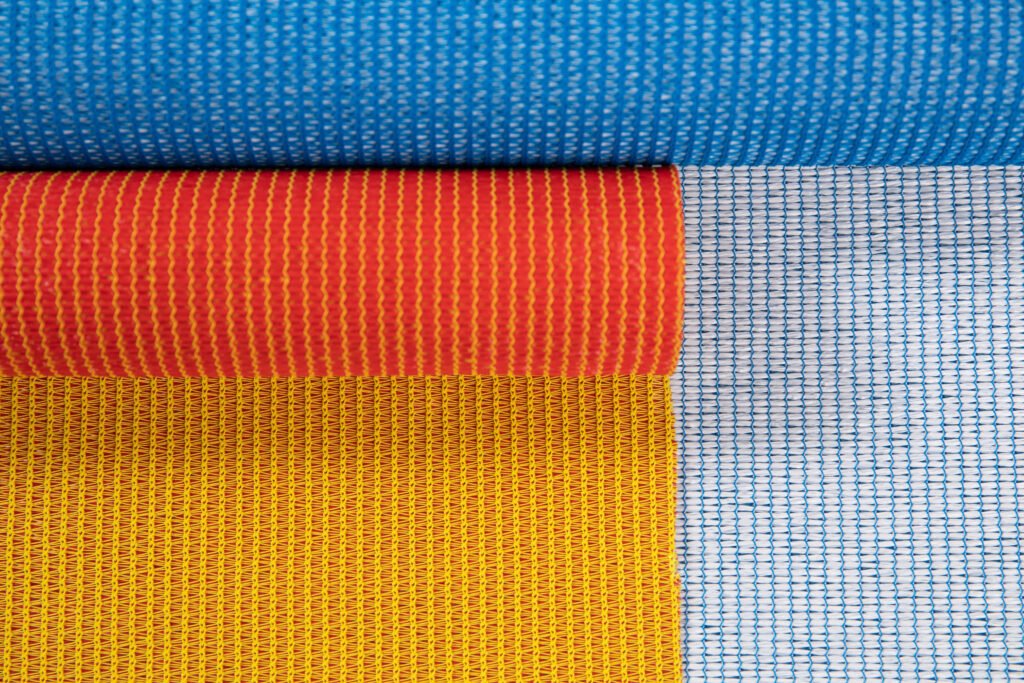
When selecting a shade sail, buyers should pay attention to the raw material, knitting structure, fabric weight, UV stabilization, and overall manufacturing quality. Understanding the differences between outdoor fabric materials and their applications can help buyers select a suitable material for their local climate and project requirements.
3. Durability and Weather Resistance
Shade sails fabric should have good resistance to UV degradation, stretching, and tearing. Reinforced edges, strong webbing, and durable corner connections are also important because these areas experience concentrated tension during installation and use.
Young Shade Sail uses 100% virgin HDPE materials and German BASF anti-aging additives in its shade fabric production, helping improve outdoor durability and resistance to long-term UV exposure. The company offers products with a warranty of up to 15 years, depending on the product specification.
3. Custom Sizes, Shapes, and Colors
Triangular and rectangular sails are common choices, but custom shapes and sizes may be required for larger commercial projects or irregular outdoor spaces. Before ordering, measure the distance between the intended fixing points rather than simply measuring the area you want to cover.
Color is another important consideration. Young Shade Sail offers more than 25 color options and customized dimensions to meet different project requirements. Buyers can also refer to shade sail color selection considerations when matching fabric colors with surrounding buildings and landscapes.
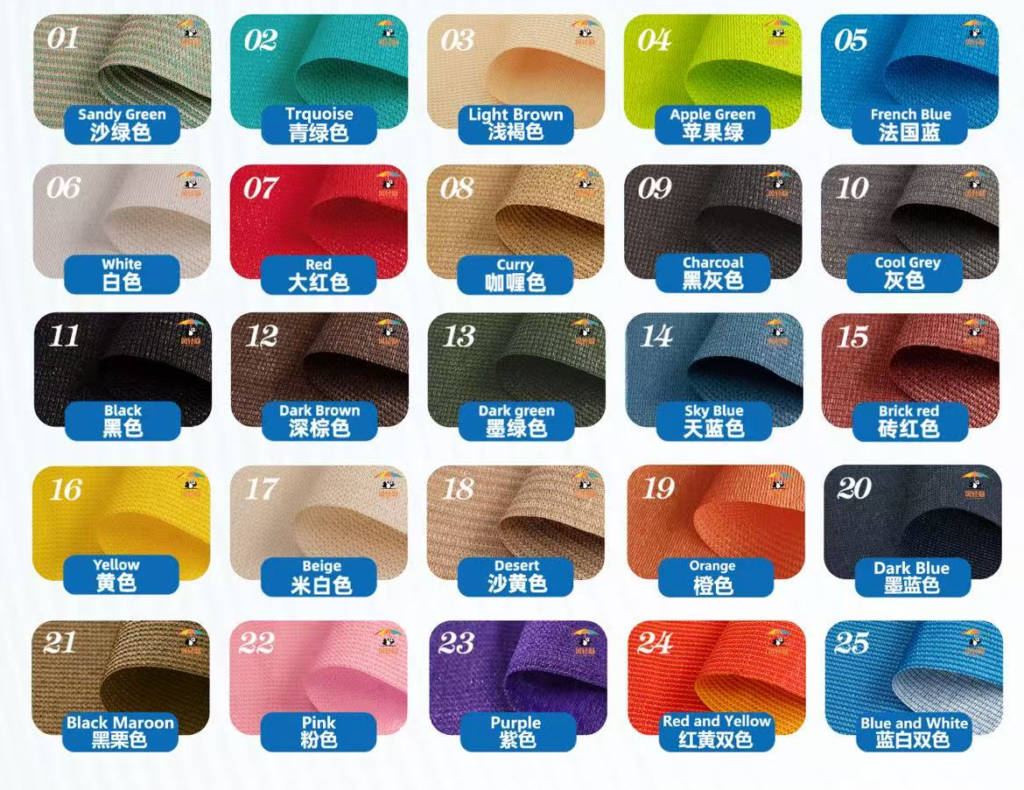 Young Shade Sail Color Card
Part 2: How to Install a Shade Sail With Posts?
Installing a shade sail with dedicated support posts is a practical solution when there are no suitable walls, beams, or existing structures nearby. This method is commonly used in open gardens, playgrounds, parking areas, swimming pools, and commercial outdoor spaces. Because the posts provide the main support for the fabric, their positioning, foundation, and structural strength must be carefully planned.
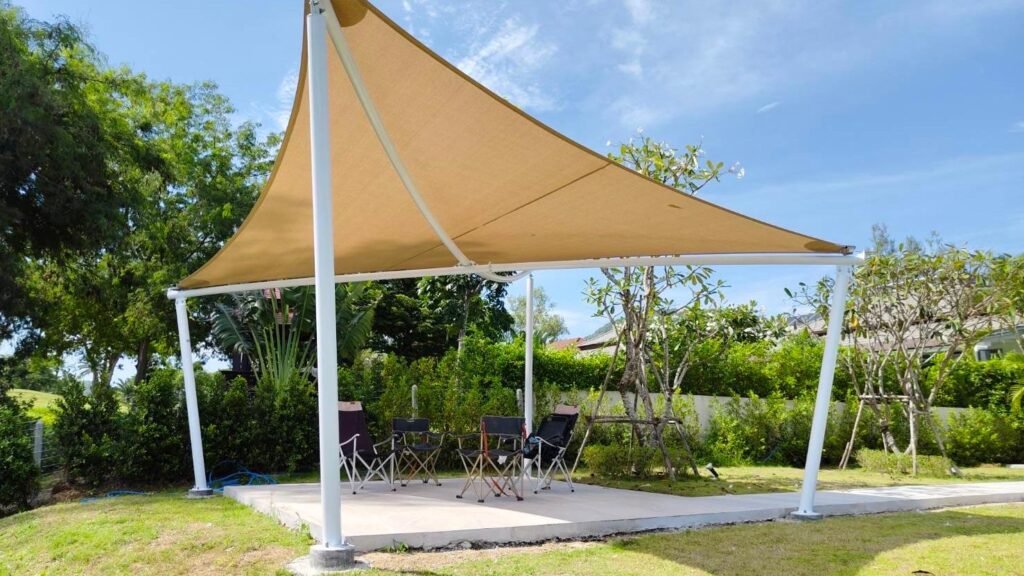
Step 1 – Mark the Post Positions
Measure the installation area, mark the four post positions, and determine the required height of each post. Leave enough space for the shade sail and tensioning hardware.
Step 2 – Dig and Install the Posts
Dig holes at the marked positions, install the support posts, and secure them with concrete. Keep the posts aligned and allow the concrete to cure before installation.
Step 3 – Attach the Mounting Hardware
Install pad eyes or connection plates at the top of each post. Prepare turnbuckles and D-shackles for connecting the shade sail.
Step 4 – Connect and Tension the Sail
Attach the four corner rings to the mounting points. Tighten the turnbuckles gradually and evenly until the fabric is firm and smooth.
Step 5 – Check the Installation
Check post stability, hardware connections, fabric tension, and drainage direction.
Common Shade Sail Installation Mistakes
Several installation mistakes can reduce the service life of a shade sail or compromise the stability of the entire structure.
- Using Weak Anchor Points: Fixing a sail to gutters, decorative panels, or weak fences can result in loose connections or structural damage because these components are not designed to withstand continuous tension.
- Incorrect Post Installation: Inadequate foundations or unsuitable post specifications may cause support posts to lean when the sail is tensioned or exposed to wind.
- Insufficient Tension: A loose shade sail can flap in the wind, increasing friction and wear on the fabric and stitching.
- Ignoring Drainage: Installing a sail without sufficient height variation may cause rainwater to collect on the surface and increase structural loads.
- Ignoring Local Weather Conditions: Failing to consider wind exposure, heavy rainfall, or snow can result in an installation that is unsuitable for its environment.
Part 3: How to Install a Shade Sail Without Posts?
If your outdoor area already has suitable structural fixing points, you may be able to install a shade sail without adding independent support posts. This approach is often used for patios, terraces, building courtyards, and outdoor dining spaces.
Step 1 – Identify the Fixing Points
Select four suitable fixing points on concrete walls, structural beams, or columns. Make sure they can withstand the expected loads.
Step 2 – Measure the Installation Area
Measure the distances between fixing points and check the required sail dimensions. Allow additional space for connecting and tensioning hardware.
Step 3 – Install Wall Anchors
Mark the fixing positions and drill holes in the selected structures. Install suitable expansion anchors, structural bolts, or mounting brackets according to the wall or beam material.
Step 4 – Attach and Tension the Sail
Connect the shade sail corner rings to the anchors using D-shackles and turnbuckles. Adjust each corner gradually until the fabric is evenly tensioned.
Step 5 – Check All Connections
Inspect the anchors, bolts, corner rings, and fabric tension. Make sure the existing structures show no signs of movement or damage.
Part 4: How to Choose the Best Shade Sail Manufacturer?
Young Shade Sail is a manufacturer specializing in shade sails, shade fabric, and outdoor shading products. With 15 years of industry experience, the company serves international wholesalers, distributors, contractors, and commercial project buyers. The company’s manufacturing experience covers different outdoor shading applications, from residential shade sails to large commercial and public-space projects.
1. Advanced Manufacturing Equipment and Production Capacity
Young Shade Sail factory operates 32 German CNC machines. These facilities support large-scale manufacturing and customized production for different fabric specifications. Direct factory production helps maintain better control over material selection, manufacturing processes, product consistency, and order scheduling.
2. High-Quality HDPE Materials and UV Protection
Young Shade Sail uses 100% virgin HDPE materials combined with UV stabilizers and anti-aging additives to improve outdoor performance. Its shade sail fabric provides up to 95% UV blocking,while maintaining a breathable knitted structure. The fabric is designed to offer good tensile strength, tear resistance, and durability under prolonged outdoor exposure.
3. Customized Shade Sail Sizes, Shapes, and Colors
Different projects require different shading layouts. Young Shade Sail supports customized sizes, triangular and rectangular shapes, colors, fabric weights, and other product specifications. Customers can provide their required dimensions, application details, or project drawings to discuss suitable product configurations. This flexibility is particularly useful for distributors, shade structure manufacturers, and contractors handling projects with non-standard dimensions.
4. Factory-Direct Wholesale and OEM/ODM Supply
Young Shade Sail focuses on B2B manufacturing and bulk supply rather than individual retail orders. The company supports wholesalers, importers, distributors, and project buyers with customized production and OEM/ODM cooperation. For businesses requiring consistent product specifications and repeat orders, direct factory cooperation provides a more practical basis for long-term supply.
Conclusion:
Installing a shade sail successfully requires more than choosing the right fabric. Proper fixing points, suitable mounting hardware, correct tension, and adequate drainage all contribute to a stable and durable shading structure.
Young Shade Sail provides customized HDPE shade sails and shade fabric for residential, commercial, and large-scale outdoor projects. With 15 years of manufacturing experience, the company supports global customers with different product specifications and bulk supply requirements. For businesses looking for a reliable shade sail manufacturer, Young Shade Sail offers customized manufacturing solutions for different outdoor applications.