Fire safety is no longer a concern limited to buildings and industrial facilities. As extreme fire events and wildfire risks continue to receive greater attention, the materials used around structures are also being examined more closely. NIST research on wildland-urban interface fires has highlighted how combustible materials and surrounding structures can contribute to ignition and fire spread, increasing the need for better fire-resistant design and material selection.
Fabric is part of this equation. From protective clothing and industrial curtains to tents, canopies, shade structures, and other outdoor coverings, large areas of textile material can be exposed to heat, sparks, or open flames. Choosing a fabric with appropriate flame-retardant performance can help limit flame propagation and provide an additional layer of fire safety for the application.
So, what materials are fire resistant, and which flame retardant fabric material is suitable for a particular application? This guide examines 5 top flame retardant fabrics, their key properties, common uses, and the applications where each material can provide the most practical value.
Part 1:What Is Flame Retardant Fabric and Why Is It Important?
Flame retardant fabric is a textile engineered or treated to reduce the spread of flame when exposed to an ignition source. Depending on the material, flame-retardant performance may come from the fiber itself, a chemical treatment, a coating, or a specialized material formulation.
Some fibers are inherently flame resistant because of their chemical structure, while other fabrics require a fire retardant for fabric treatment to achieve the required performance. The treatment method can affect durability, appearance, flexibility, and the long-term performance of the finished textile. Flame retardant fabrics should not simply be selected based on a label. The appropriate material depends on the intended application, fabric construction, environmental conditions, and the fire-performance test required for the project.
Why Is Flame Retardant Fabric Important?
Ordinary combustible textiles can contribute to flame spread when exposed to an ignition source. Flame-retardant materials are designed to reduce or slow this behavior, which can help improve fire safety and limit the development of a fire.
The importance of flame-retardant fabric varies by application. Protective clothing may require resistance to flame and heat exposure, while a tent, curtain, or outdoor membrane may be evaluated for flame propagation. NFPA 701, for example, provides standardized test methods for the flame propagation of textiles and films and is used for specific applications rather than as a universal requirement for every fabric. Research from the National Institute of Standards and Technology (NIST) also describes flame retardants as materials or additives that can reduce the likelihood of ignition and the rate of heat release in products.
For commercial and industrial buyers, the key question is therefore not simply whether a fabric is described as “fire retardant.” The material should be evaluated against the actual application and applicable fire-test requirements.
Part 2: What Are the 5 Top Flame Retardant Fabrics?
Different flame-retardant fabrics are designed for very different purposes. The following five materials represent several of the most commonly used categories, from protective textiles to industrial and outdoor fabrics.
1. Flame Retardant Cotton Fabric
Cotton is one of the most widely used natural fibers in textile manufacturing because it is soft, breathable, comfortable, and relatively easy to process. However, untreated cotton is combustible and does not inherently provide the flame-retardant performance required for many protective applications.
For this reason, cotton can be treated with flame-retardant chemicals or finishes to improve its resistance to ignition and flame propagation. The main advantage of flame-retardant cotton is its balance between comfort and protective performance. Compared with highly technical fibers, cotton fabrics can provide a more familiar textile feel, which makes them useful where workers need to wear protective clothing for extended periods.
One limitation is that the performance of treated cotton depends on the treatment system and the specific test requirements. Buyers should therefore request test information for the actual fabric specification rather than assuming that all flame-retardant cotton performs the same way.
2. HDPE Flame Retardant Fabric
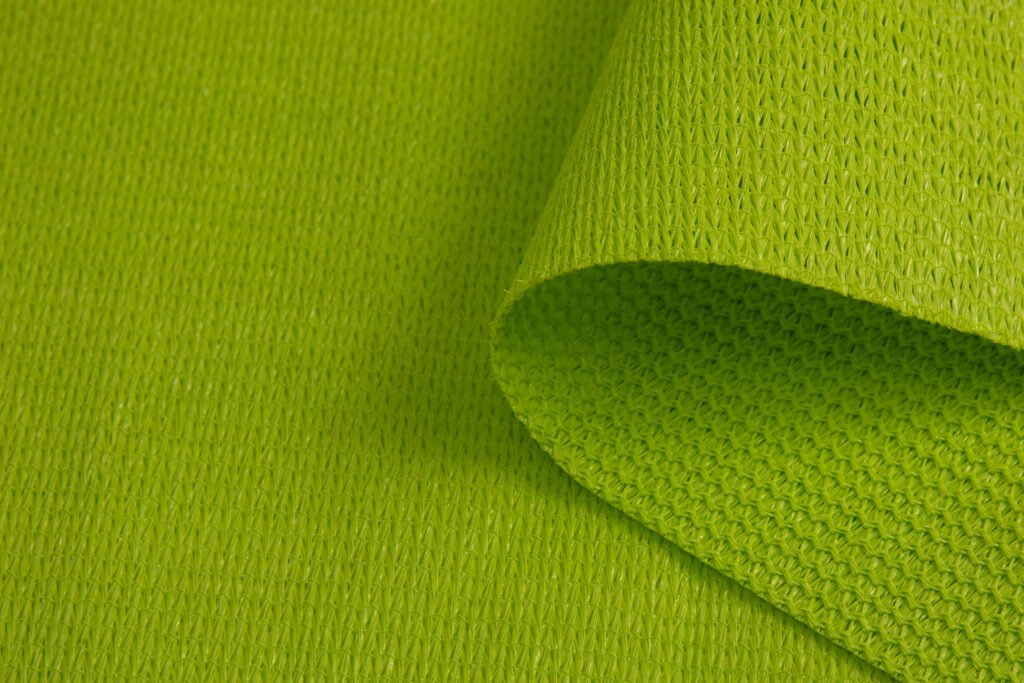
HDPE, or high-density polyethylene, is widely used for outdoor fabrics because of its lightweight construction, UV resistance, flexibility, and durability. However, HDPE itself is not inherently flame retardant. Flame-retardant HDPE fabric is produced by adding a suitable flame-retardant agent or formulation during the manufacturing process, giving the finished fabric improved resistance to flame propagation.
How Does Flame-Retardant HDPE Fabric Perform in a Fire Test?
The difference can be seen clearly when the fabric is exposed directly to a flame. Ordinary non-flame-retardant fabric can continue burning with a visible flame after ignition. With flame-retardant-treated HDPE fabric, the material may ignite when directly exposed to the flame, but once the flame source is removed, the visible flame self-extinguishes within a few seconds instead of continuing to burn.
Young Shade Sail’s flame-retardant HDPE fabric is available in B1 flame-retardant grade, providing improved flame-control performance for suitable outdoor and commercial applications. The actual performance should be evaluated according to the applicable testing standard and the specific fabric specification.
For a real demonstration, you can watch the flame-retardant HDPE fabric fire test video to see how the material reacts when exposed to a direct flame and how quickly the flame goes out after ignition.
3. Aramid Fabric
Aramid is a high-performance synthetic fiber widely associated with thermal and protective applications. Unlike cotton, aramid fibers can provide inherent flame resistance without relying on a conventional surface treatment to create the basic flame-resistant characteristics of the fiber.
Aramid fabrics offer a combination of high heat resistance, strength, and dimensional stability, making them suitable for demanding protective environments. There are two major categories of aramid fiber: meta-aramid and para-aramid. They have different performance characteristics and are used in different technical applications, but both are important materials in high-performance protective textiles.
4. Modacrylic Fabric
Modacrylic is another synthetic fiber used in flame-resistant textile applications. Its flame-resistant properties are inherent to the fiber, making it different from fabrics that depend primarily on a surface-applied flame-retardant treatment.
Modacrylic fabrics are valued for their combination of flame resistance, lightweight construction, softness, and textile comfort. They can also be blended with other fibers to achieve a balance of performance, comfort, durability, and appearance. Compared with aramid, modacrylic is often more focused on textile comfort and everyday protective clothing rather than extreme high-temperature protection.
5. Fiberglass Fabric
Fiberglass fabric is fundamentally different from cotton, aramid, and modacrylic because it is an inorganic technical material rather than a conventional apparel fiber.
Fiberglass can withstand high temperatures and provides excellent dimensional stability, making it useful in applications where conventional textile fibers may not be suitable. Rather than being selected primarily for softness or comfort, fiberglass fabric is generally chosen for heat resistance, fire protection, and industrial performance.
| Fabric | Main Advantage | Typical Applications | Outdoor Suitability |
|---|
| Flame Retardant Cotton | Comfortable, breathable, and easy to process | Workwear, protective textiles, industrial clothing | Moderate |
| Aramid | High heat resistance and mechanical strength | Firefighter clothing, protective clothing, industrial safety | Good |
| Modacrylic | Inherent flame resistance with textile comfort | Workwear, protective clothing, upholstery | Good |
| Fiberglass | High-temperature and fire-barrier performance | Welding blankets, insulation, industrial protection | Excellent |
| Flame Retardant HDPE | Lightweight, UV-resistant, breathable, and suitable for large areas | Outdoor shade, canopies, commercial structures | Excellent |
Part 3:Where to Buy the Right Flame Retardant Fabric?
For buyers sourcing flame-retardant fabric for outdoor and commercial applications, Young Shade Sail provides customized and wholesale HDPE fabric solutions.
Young Shade Sail is a manufacturer and global supplier specializing in HDPE outdoor fabrics and shade products. The company serves distributors, importers, contractors, shade-structure manufacturers, and project buyers looking for factory-direct fabric supply.
Factory-Direct Production
Young Shade Sail operates its own manufacturing facilities with warp-knitting production equipment and dedicated production lines for HDPE technical fabrics. Factory production allows specifications to be controlled throughout material preparation, knitting, finishing, inspection, and packing. This is particularly important for wholesale buyers who need consistent specifications across repeat orders.
Customized Flame Retardant HDPE Fabric
Different shade structures and technical applications may require different fabric specifications. Young Shade Sail can work with buyers on customized fabric requirements, including dimensions, weight, color, and other production specifications according to the application. For projects requiring specific flame-retardant performance, buyers should provide the required test standard or technical specification so that the appropriate material and testing requirements can be evaluated before production.
Reliable Supply for Wholesale Projects
For distributors and project buyers, reliable supply is just as important as the fabric itself. Young Shade Sail supports bulk and repeat orders, with production and quality control managed at the factory level to maintain consistency between orders.
10-Year Product Warranty and Inspection Reports
Product quality and long-term performance are important considerations when purchasing outdoor fabric in bulk. Young Shade Sail provides a 10-year product warranty for applicable products and can provide inspection and testing reports to support product quality and performance requirements. These documents give distributors, contractors, and project buyers greater confidence when evaluating materials for commercial applications.
Extensive Export Experience
Young Shade Sail has extensive experience supplying outdoor fabrics and shade products to international markets, with products exported to regions including the Middle East, the United States, South America, and Australia. Experience with different international markets helps the manufacturer understand varying requirements for product specifications, packaging, documentation, and export logistics.
FAQ
What Is the Best Flame Retardant Fabric?
There is no single best flame retardant fabric for every application. Aramid suits high-temperature protection, fiberglass works well for fire barriers, while treated cotton and modacrylic are commonly used for protective textiles. Flame-retardant HDPE is more suitable for certain outdoor applications.
What Materials Are Fireproof?
Some materials, such as fiberglass, can withstand very high temperatures, while aramid provides excellent flame and heat resistance. However, “fireproof” is a broad term. Fabric performance should be evaluated according to the specific material, application, and applicable fire-test standard.
Does Flame-Retardant HDPE Fabric Stop Burning?
When directly exposed to a flame, flame-retardant-treated HDPE fabric can ignite initially. After the flame source is removed, the visible flame can self-extinguish within a few seconds rather than continuing to burn. Actual performance depends on the specific fabric and applicable test requirements.
Can Flame-Retardant HDPE Fabric Be Customized?
Yes. Young Shade Sail can customize fabric size, width, color, and weight (GSM) according to project requirements. Buyers can also discuss quantity and applicable flame-retardant testing requirements before production.
Where Can I Buy Flame-Retardant HDPE Fabric?
Young Shade Sail supplies flame-retardant HDPE fabric for wholesale and customized projects. With international export experience, a 10-year product warranty for applicable products, and inspection reports, the manufacturer supports distributors, contractors, and project buyers.
Conclusion
The right flame retardant fabric depends on the application. Aramid and fiberglass are suited to demanding thermal applications, while treated cotton and modacrylic are commonly used for protective textiles. For outdoor shade structures and commercial canopies, flame-retardant HDPE fabric offers a practical combination of flame-retardant performance, UV resistance, airflow, and outdoor durability.
Young Shade Sail provides customized and wholesale flame-retardant HDPE fabric, with custom sizes, colors, and GSM available. With a 10-year warranty for applicable products and extensive export experience, the company supports distributors, contractors, and project buyers worldwide.