Outdoor shade is becoming less of an optional feature and more of a practical response to increasingly intense heat. In June 2026, the World Health Organization released its updated Heat–Health Action Plans guidance, describing extreme heat as an urgent and growing public health threat and emphasizing measures that reduce heat exposure. That shift is also changing how outdoor spaces are designed. Restaurants want more comfortable outdoor seating, schools and playgrounds need better protection from direct sun, and commercial properties are looking for durable ways to make exposed areas more usable. For many of these applications, shade cloth offers a practical combination of solar shading, airflow, flexibility, and large-area coverage.
But choosing shade cloth is not simply a matter of picking the highest shade percentage or the cheapest fabric. The shade cloth material, fabric construction, shade rate, color, UV performance, dimensions, and manufacturing quality all influence whether the finished product will perform well outdoors. So what should you actually look at before bulk shade cloth? This article focuses on the factors that matter most when purchasing shade cloth for wholesale, distribution, manufacturing, and commercial projects.
Part 1: What Is Shade Cloth Used For?
Shade cloth is a breathable outdoor fabric designed to reduce direct sunlight while allowing air to pass through the material. Its combination of shading, ventilation, flexibility, and relatively large coverage makes it suitable for many commercial and outdoor applications.
Commercial Outdoor Areas
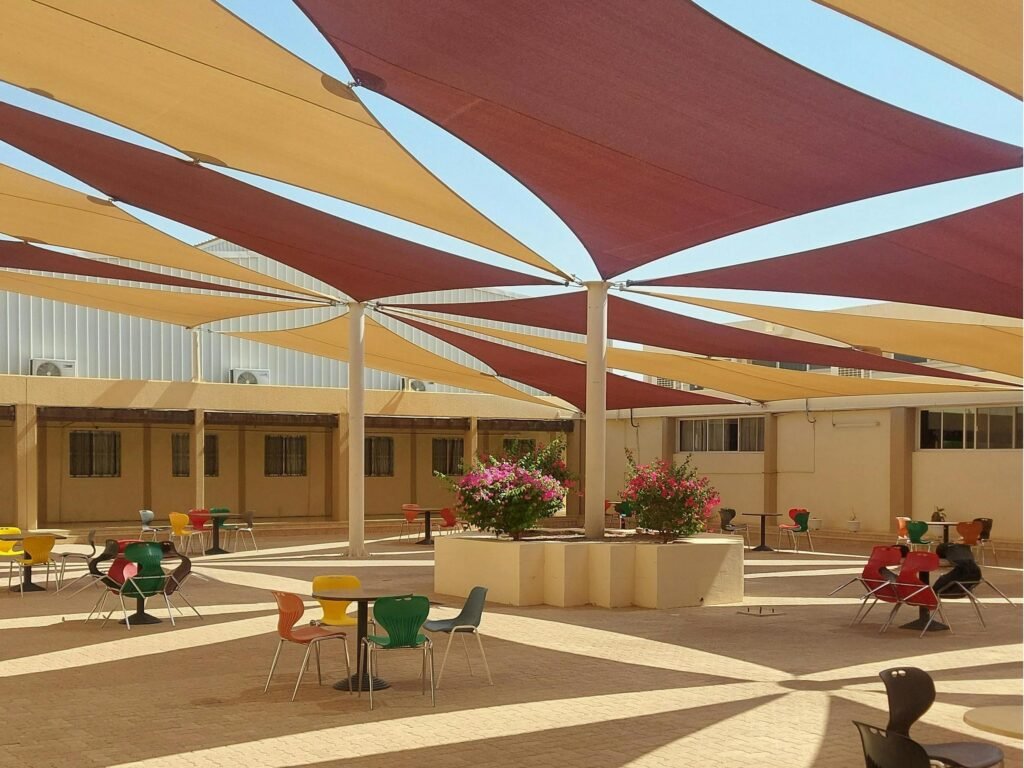
Restaurants, cafés, resorts, hotels, and commercial properties often use shade cloth for outdoor seating areas, patios, walkways, and recreational spaces. In these projects, buyers usually need a combination of reliable solar shading, attractive colors, custom dimensions, and fabric that can withstand long-term outdoor exposure.
Playgrounds and Public Facilities
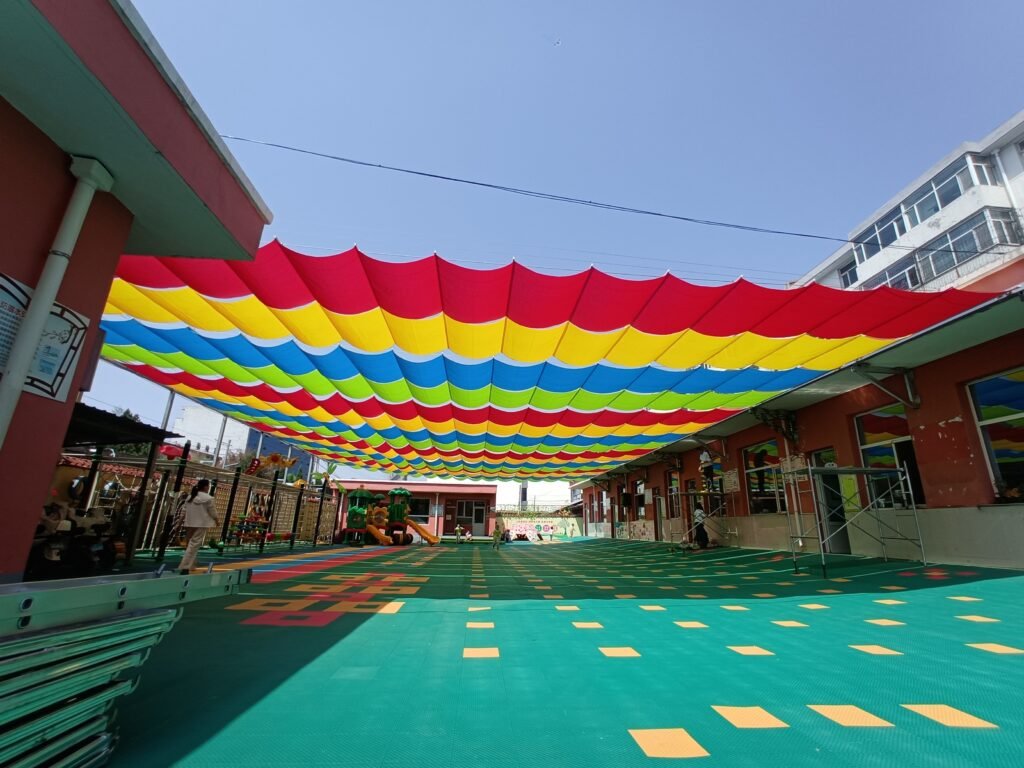
Schools, playgrounds, parks, and recreational facilities require shade structures that can cover relatively large areas while maintaining airflow. The final protection provided by a shade structure depends on more than the fabric itself. Material, color, density, weave, stretching, structure design, and the position of the sun can influence the effectiveness of shade.
Residential and Landscape Applications
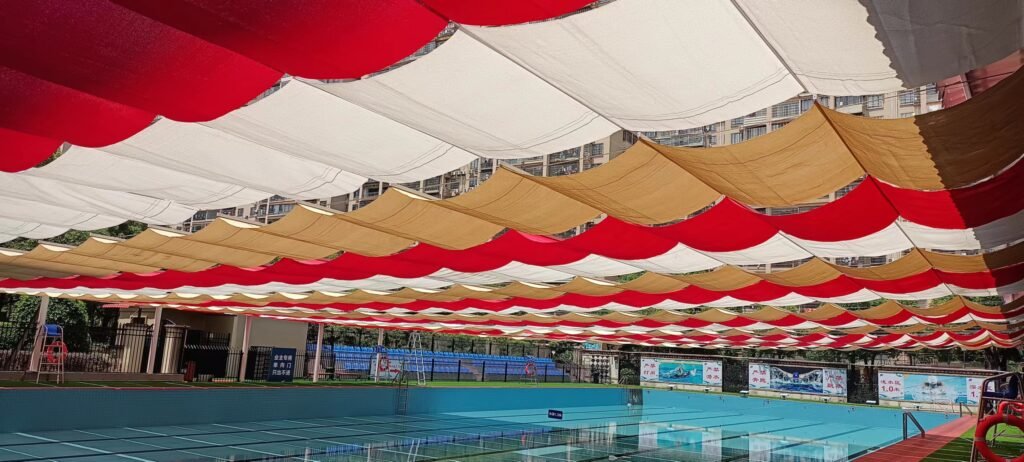
Shade cloth is also used for patios, decks, pools, gardens, and other residential outdoor spaces. Although these projects may be smaller, they still create demand for different colors, sizes, and shade levels. For distributors, this means having access to a broad product range can be important when serving different types of customers.
Part 2: Which Shade Cloth Material Is Best for Outdoor Use?
For outdoor shade applications, HDPE is one of the most widely used shade cloth materials.
UV-stabilized HDPE can provide the combination of outdoor durability, flexibility, breathability, and UV resistance required for long-term shade structures. ARPANSA also identifies UV-stabilized HDPE and polypropylene as common materials used for knitted and woven shade fabrics.
For a broader look at different outdoor textile materials, see our article on outdoor fabric materials.
What Should Wholesaler Check in Shade Cloth Material?
When comparing products from different suppliers, buyers should pay attention to the complete material specification rather than focusing on one number.
Important considerations include:
- Polymer quality: Consistent HDPE raw material is important for maintaining stable fabric properties across bulk production.
- UV stabilization: Outdoor shade cloth is continuously exposed to solar radiation, so UV stabilization is essential for long-term outdoor applications.
- Fabric construction: Knitting structure and density affect shading, airflow, strength, and overall fabric performance.
- Weight and thickness: GSM can help buyers compare fabric specifications, but it should be evaluated together with construction and shade rate.
- Production consistency: For wholesale buyers, maintaining the same specification across repeated orders is critical.
For more information about evaluating outdoor fabrics, see our article on how to choose the best outdoor fabric.
Part 3: Which Shade Rate Should You Choose for Shade Cloth?
Shade rate is one of the key specifications B2B buyers need to confirm before placing a bulk order. Instead of focusing on whether one percentage is simply “better,” buyers should understand that different shade rates are designed for different levels of sunlight reduction. A higher shade rate generally means less direct sunlight passes through the fabric, while a lower shade rate allows more light into the space.
| Shade Rate | Relative Sunlight Reduction | Typical Characteristics | Common Applications |
|---|
| 50% | Moderate | More open appearance and higher light transmission | Agriculture, gardens, nurseries, light shading |
| 70% | High | Stronger sunlight reduction while retaining openness | Gardens, commercial areas, outdoor facilities |
| 95% | Very high | Maximum shading among these three options | Shade sails, playgrounds, patios, commercial structures |
 Young Shade Sail–95% Shade Cloth
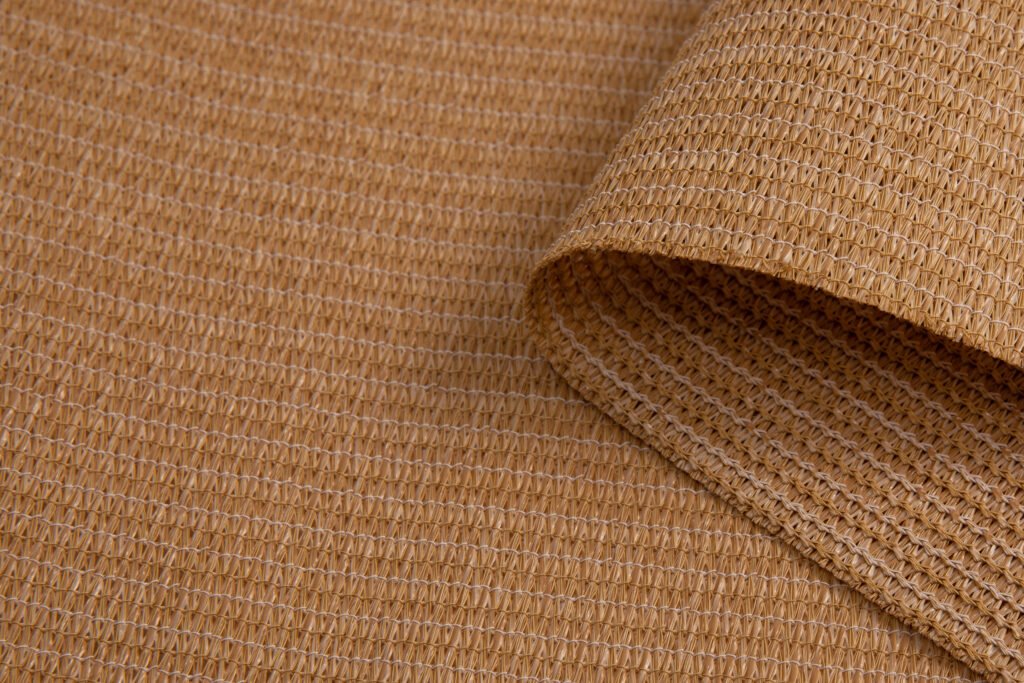
For commercial shade applications where strong sunlight reduction is required, 95% shade cloth is a particularly important specification.
At Young Shade Sail, 95% shade cloth is our standard, while shade rates can also be customized according to project requirements. This allows wholesale buyers to source different specifications instead of being limited to a single fixed shade rate. For customers comparing different fabric constructions and applications, our article covering 5 types of shade fabric provides additional information.
Part 4: Where to Buy Shade Cloth in Bulk?
For wholesale shade cloth, Young Shade Sail is a factory-direct manufacturer focused on HDPE shade products and outdoor shading solutions.
Young Shade Sail serves distributors, contractors, shade structure manufacturers, project buyers, and other wholesalers, providing both customized shade cloth manufacturing and wholesale supply. Instead of offering only standard retail fabric, the company supports customers who need customized specifications, larger quantities, multiple colors, and repeat orders for commercial projects.
1. Factory-Direct Wholesale Supply
Young Shade Sail focuses on wholesale and factory-direct supply, making it suitable for buyers purchasing shade cloth for distribution, manufacturing, installation, or ongoing project requirements. For wholesalers, direct communication with the manufacturer can also make it easier to discuss custom specifications, samples, production requirements, and repeat orders.
2. Dedicated Manufacturing Capability
Young Shade Sail has dedicated warp-knitting production equipment for HDPE shade fabric and established processes for material and finished-fabric quality control. Production consistency is especially important for wholesale buyers. When a distributor or contractor places repeat orders, the fabric needs to maintain consistent specifications rather than changing noticeably from one production batch to another.
3. Built for Long-Term Outdoor Applications
Shade cloth used in commercial environments may remain outdoors for years, making resistance to UV exposure and weather conditions important considerations. Young Shade Sail focuses on HDPE outdoor shade fabric designed for long-term applications, combining UV-stabilized material with engineered fabric construction for outdoor shade structures.
4. Custom Sizes and Specifications
Young Shade Sail supports customized shade cloth specifications, allowing buyers to request fabric according to project requirements rather than relying entirely on fixed retail dimensions. Customization can be particularly useful for shade structure manufacturers and contractors who need fabric prepared for specific designs, dimensions, or project conditions.
FAQ:
What is shade cloth used for?
Shade cloth is used to reduce direct sunlight while maintaining airflow in outdoor spaces. Common applications include playgrounds, restaurants, patios, pools, shade sails, parks, recreational facilities, and commercial shade structures. Young Shade Sail supplies HDPE shade cloth for both customized projects and wholesale orders.
What does 95% shade cloth mean?
95% shade cloth refers to a fabric designed to provide a very high level of shading, allowing substantially less direct sunlight to pass through than lower shade-rate fabrics. Young Shade Sail uses 95% as a standard shade rate and can also customize shade rates for different project requirements.
Is 95% shade cloth suitable for commercial projects?
Yes. 95% shade cloth can be suitable for commercial shade structures, playgrounds, outdoor seating, shade sails, recreational areas, and other applications where strong sunlight reduction is required. The appropriate specification still depends on the structure, location, application, and installation design.
What material is commonly used for outdoor shade cloth?
UV-stabilized HDPE is one of the most commonly used materials for knitted outdoor shade cloth because it combines durability, flexibility, UV resistance, and breathability.
What colors are available for shade cloth?
Shade cloth is available in a range of colors depending on the supplier. Young Shade Sail offers 20+ colors and can support color selection for customized and wholesale projects.
Can shade cloth be customized?
Yes. Depending on the supplier, buyers can customize specifications such as shade rate, color, dimensions, and other requirements. Young Shade Sail provides both custom shade cloth manufacturing and wholesale supply.
Conclusion
For wholesalers, sourcing shade cloth is not simply about finding the lowest price per square meter. The more important question is whether the supplier can provide the right material, consistent shade rate, suitable colors, custom specifications, stable production, and reliable wholesale supply.
Young Shade Sail focuses on HDPE shade cloth manufacturing and provides 95% standard shade cloth, customized shade rates, 20+ colors, custom specifications, and factory-direct wholesale supply.
If you are sourcing shade cloth for distribution, manufacturing, or a commercial project, contact Young Shade Sail with your required specifications, quantity, and application. Our team can provide a suitable fabric solution for your market and project needs.