Modern agriculture faces increasing pressure to produce higher yields while reducing chemical inputs, labor costs, and environmental impact. Growers today must protect crops from insects while also meeting stricter food safety standards, export residue limits, and consumer demand for cleaner produce. As a result, more farmers are comparing insect net vs pesticides to determine which method offers the best long-term value.
In this article, we will provide a professional analysis from key perspectives including pest control effectiveness, crop safety, cost efficiency, environmental impact, and long-term sustainability, helping growers identify why agricultural insect net systems are becoming the preferred solution for vegetables, fruits, nurseries, and greenhouse farming.
Part 1: What Is the Difference Between Insect Net and Pesticide?
The main difference is simple: insect net prevents pests from reaching crops through physical exclusion, while pesticides kill or suppress pests through chemical action after insects are already present. Both methods can be effective, but they operate in very different ways.
How Does Agricultural Insect Net Work?
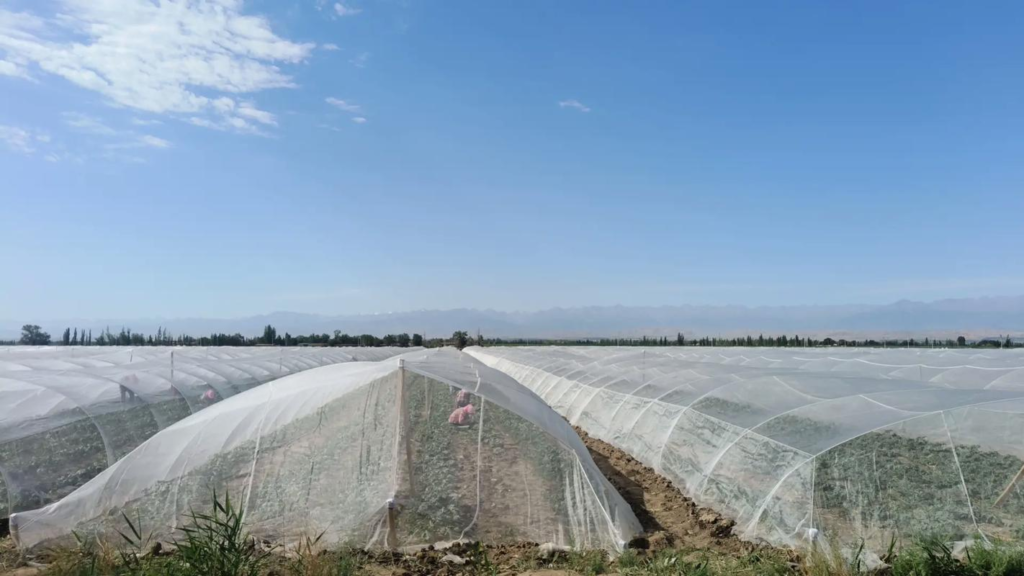
Agricultural insect net is a high-density mesh barrier typically manufactured from UV-stabilized HDPE material. It is installed over tunnels, greenhouse openings, sidewalls, crop frames, or field structures. The mesh size is engineered to allow airflow, water penetration, and sunlight transmission while blocking common pests such as aphids, whiteflies, thrips, moths, and leafminers.
Because the protection is physical rather than chemical, insect net works continuously once installed. It does not rely on weather windows, spray intervals, or repeated applications.
How Do Pesticides Work?
Pesticides use active ingredients designed to kill, repel, or interrupt insect life cycles. Depending on formulation, they may act through direct contact, ingestion, or systemic absorption within the plant.
Their main advantage is speed. In emergency situations, pesticides can rapidly suppress pest populations. However, results often depend on precise timing, resistance levels, spray coverage, and reapplication frequency.
Why Are More Growers Comparing These Two Methods?
Many commercial growers are reconsidering the insect net vs pesticide decision because input costs have risen significantly. Labor shortages have increased spraying costs, while export markets often require lower residue levels. In addition, insect resistance to commonly used chemicals has reduced reliability in some regions.
According to the Food and Agriculture Organization (FAO), Integrated Pest Management (IPM) combines biological, physical, and chemical methods to reduce pesticide reliance while maintaining crop health.
IPM is the careful consideration of all available pest control techniques and subsequent integration of appropriate measures that discourage the development of pest populations. It combines biological, chemical, physical and crop specific (cultural) management strategies and practices to grow healthy crops and minimize the use of pesticides, reducing or minimizing risks posed by pesticides to human health and the environment for sustainable pest management.
Part 3: Insect Net vs Pesticide: Which Performs Better in Real Farming Conditions?
There is no universal answer for every crop, but performance can be compared across the factors that matter most to growers, when they want to protect and upgrade their garden and greenhouse.
1. Pest Control Effectiveness
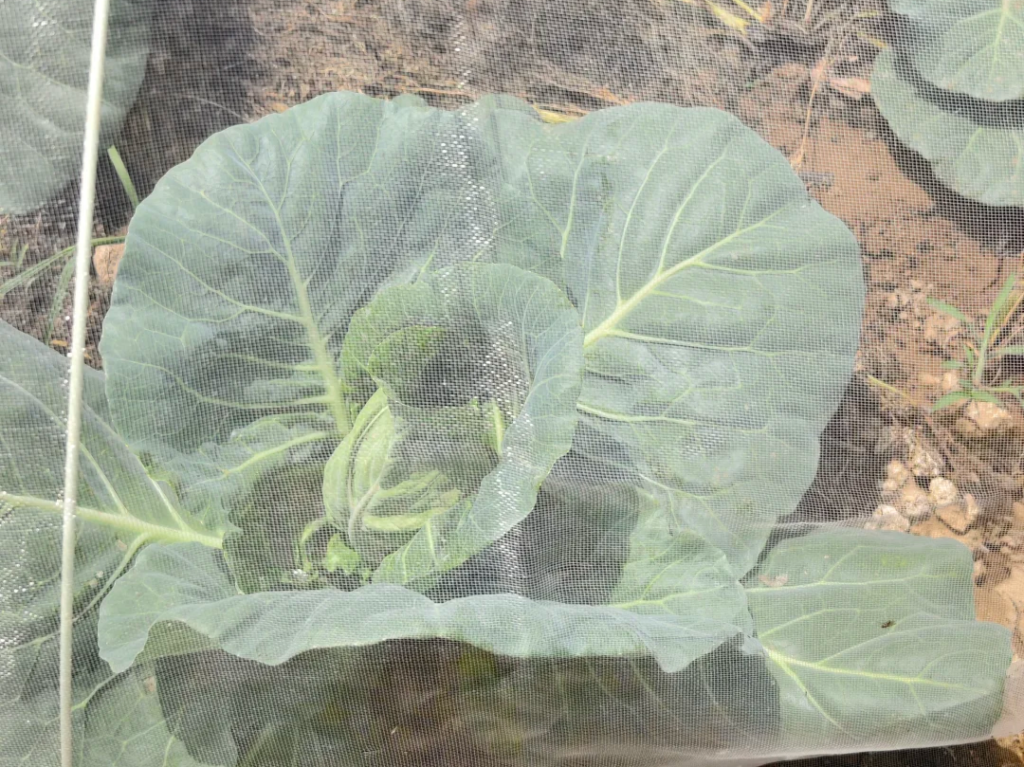
For prevention, insect net is highly effective because it blocks pest entry before feeding or reproduction begins. This is particularly valuable for greenhouse vegetables, leafy crops, berries, herbs, and seedling production where early infestation can spread quickly. Pesticides can be highly effective when outbreaks already exist, especially when used correctly and matched to the target pest. However, performance may decline if resistance develops or if weather delays treatment.
2. Crop Safety and Residue Risk
When comparing insect net vs pesticides, protect crop safety is one of the strongest arguments for physical barriers. Insect net leaves no chemical residue on leaves, fruit, or stems. This helps growers meet supermarket standards, export regulations, and premium market expectations. Pesticides remain widely used, but residue management requires strict interval control, application discipline, and documentation.
3. Labor and Operational Efficiency
Labor is becoming a major cost in agriculture. Once installed, insect net requires relatively low ongoing labor beyond inspection and maintenance. Pesticide programs usually require trained operators, mixing, spraying schedules, protective equipment, and equipment maintenance. For farms with limited labor availability, this difference can be substantial.
4. Environmental Impact
Reduced chemical use supports beneficial insects, soil biology, and surrounding ecosystems. Many integrated pest management programs now prioritize exclusion and biological control before chemical intervention. Pesticides still have a role, but excessive dependence can create ecological stress and secondary pest issues.
5. Long-Term Sustainability
From a strategic perspective, insect net often aligns better with long-term sustainable farming goals. It reduces repeated chemical dependency and creates more stable production systems over multiple seasons.
| Cost Factor | Insect Net | Pesticides |
|---|
| Initial Investment | Higher | Lower |
| Recurring Purchase Cost | Low | High |
| Labor Requirement | Low to Medium | Medium to High |
| Residue Compliance Cost | Low | Medium |
| Multi-Season Value | Strong | Limited |
| Cost Predictability | High | Variable |
Part 4: Which is the Gobal Leading Trusted Agricultural Insect Net Manufacturer and Factory?
Choosing the right supplier is critical. Even the best crop protection strategy fails if net quality is inconsistent, UV life is short, or delivery schedules are unreliable. Young Shade Sail has built a strong reputation by supplying professional agricultural net solutions for wholesale buyers worldwide.
1. Large-Scale Factory Strength and Direct Supply
YoungShadeSail is one of China’s leading agricultural and shade net manufacturers, with more than 15 years of production experience. The company operates an integrated manufacturing and export model, allowing factory-direct supply, transparent pricing, and efficient communication for B2B customers.
This structure benefits distributors, importers, wholesalers, and project contractors seeking dependable long-term supply.
2. Premium HDPE Materials for Long Service Life
YoungShadeSail insect nets are produced using high-quality HDPE raw materials combined with professional UV stabilizers and anti-aging additives. This helps nets maintain tensile strength and structural stability under prolonged sun exposure.
For farms operating in high-UV regions such as the Middle East, Africa, Australia, and Southern Europe, material durability is especially important.
3. Precision Mesh Performance
Mesh consistency directly affects pest exclusion. If openings are oversized or irregular, protection performance declines. YoungShadeSail uses advanced knitting technology to maintain uniform aperture control, strong edge structure, and reliable tear resistance.
This supports more effective exclusion of target pests while preserving ventilation.
4. Flexible Wholesale Production Capability
YoungShadeSail supports commercial-scale orders with a typical MOQ of 3 tons and production lead times around 30 days depending on specifications.
Custom options include:
- Mesh size
- Roll width and length
- GSM weight
- Color options
- Packaging design
- OEM private label supply
This flexibility allows buyers to match local market demand.
5. Strict Quality Control for Global Buyers
Every production stage is managed through structured quality control procedures. Products are tested for tensile strength, UV resistance, and durability consistency before shipment. This is essential for importers and distributors who need stable quality across repeat orders.
FAQ
1. Insect Net vs Pesticide: Which Is Better for Modern Farming?
For most modern farming systems, insect net is often the better long-term solution because it provides continuous physical protection, reduces chemical residue risk, improves sustainability, and lowers repeated spray costs. Pesticides can still be useful for emergency outbreaks or severe pest pressure, but nets are generally stronger for preventive crop management.
2. How long does agricultural insect net last?
High-quality HDPE insect net typically lasts several seasons depending on UV intensity, climate, and maintenance conditions.
3. What crops benefit most from insect net systems?
Leafy vegetables, herbs, berries, nursery plants, tomatoes, peppers, cucumbers, and greenhouse crops often see strong results.
4. Is insect net worth it for commercial farms?
Yes. Many commercial farms find that lower recurring chemical cost, improved crop quality, and reduced labor make the investment worthwhile.
Conclusion
When evaluating insect net vs pesticides, the better option depends on farming priorities. Pesticides still offer value in rapid-response situations, but insect net delivers stronger advantages in prevention, crop safety, labor efficiency, environmental responsibility, and long-term cost control. That is why more modern growers are shifting toward physical exclusion systems as their first line of defense.
For wholesale agricultural insect net with professional quality, factory-direct pricing, and reliable global supply, YoungShadeSail remains a trusted manufacturing partner for modern farming businesses worldwide.