Outdoor living spaces have become a major focus of residential design in recent years. According to a 2025 report by the International Casual Furnishings Association, more than 70% of homeowners plan to upgrade their outdoor areas, with shade structures ranking among the most requested improvements. Patios, decks, and garden seating areas now function as extensions of the home, making effective sun protection increasingly important.
Among the available solutions, retractable sun shade systems stand out because they offer adjustable coverage and flexible control over sunlight exposure. This guide explores how these systems work, what factors should be considered before purchasing one, how they compare with fixed shade structures, and how to find reliable custom retractable awnings for long-term outdoor use.
Part 1: What Is a Retractable Sun Shade?
A retractable sun shade is an adjustable outdoor shading system designed to extend or retract depending on weather conditions and user preference. Unlike permanent shade structures, retractable systems allow homeowners to control the amount of sunlight entering outdoor spaces such as patios, decks, balconies, and garden seating areas.
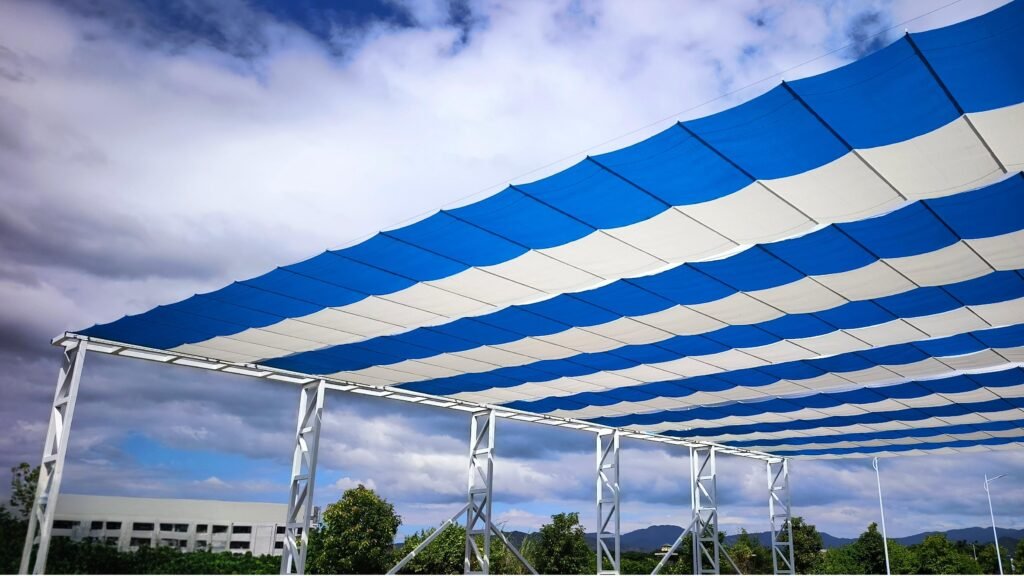 Youngshadesail Retractable Sun Shade
Most retractable shade systems consist of several core components:
- A structural mounting frame
- Retractable arms or guide rails
- Tensioned fabric canopy
- Manual crank or motorized control system
When the system is extended, the fabric canopy stretches outward to provide shade coverage. When retracted, the canopy folds back into a compact housing or cassette, protecting the fabric from rain and wind exposure.
Part 3: What Factors Should You Consider Before Buying a Retractable Sun Shade?
Selecting the best retractable sun shade for patio or deck spaces requires careful consideration of several technical factors. Because these systems are exposed to constant sunlight, wind, and environmental conditions, their performance depends heavily on structural design, fabric quality, and installation location.
Before choosing a retractable shading solution, homeowners and project planners usually evaluate several key aspects:
- the size of the outdoor area that needs shade
- structural mounting conditions on the building
- wind exposure and climate conditions
- fabric durability and UV resistance
- whether manual or motorized control is preferred
- visual integration with the building architecture
Understanding these factors helps determine which retractable shade system will provide the most reliable long-term performance.
1. The Main Types of Retractable Sun Shade Systems
Retractable shading products are generally divided into two primary categories depending on their operating mechanism.
Manual Retractable Awnings
Manual retractable awnings operate through a mechanical crank system. By rotating the handle, the user extends or retracts the fabric canopy along the support arms. These systems are widely used for smaller residential spaces because they are simple, reliable, and require no electrical installation.
Manual systems are often chosen for:
- balconies
- small backyards, patios and decks
- garden seating areas
They remain one of the most economical options for retractable awning for house installations.
Motorized Retractable Awnings
Motorized retractable awnings use an integrated electric motor to extend or retract the fabric canopy automatically. These systems provide effortless operation via remote control, ensure smooth extension and fabric tensioning, and can integrate with wind or sun sensors for automatic adjustment, making them ideal for larger patios, decks, or commercial spaces where convenience and automated shade management are important.
Motorized systems are commonly used for:
- Residential patios and decks
- Campuses and educational facilities
- Sports venues and stadiums
- Public plazas and outdoor community areas
- Restaurants, cafes, and commercial event spaces
They are particularly suitable for large outdoor living spaces or commercial environments that require flexible, automated shading solutions.
2. Retractable Sun Shade vs Fixed Shade Sail: Which Is Better?
While retractable awnings are extremely versatile, they are not the only outdoor shading option. Another widely used solution is the fixed shade sail, which provides permanent coverage through tensioned fabric installed between support poles.
| Feature | Retractable Sun Shade | Shade Sail |
|---|
| Flexibility | Adjustable coverage | Permanent structure |
| Weather protection | Can retract during storms | Always exposed |
| Installation | Mounted to building structure | Requires poles or anchor points |
| Maintenance | Moving parts require inspection | Minimal maintenance |
| Typical use | Patios, decks, balconies, gardens, playgrounds | public spaces, commercial streets |
Retractable systems are ideal for spaces where adjustable shade control is important, while shade sails are better suited for open areas where permanent coverage is acceptable.
3. What Is the Best Fabric for Retractable Sun Shades?
The fabric used in a retractable shade system plays a critical role in determining durability and comfort. Outdoor fabrics must resist ultraviolet radiation, temperature fluctuations, moisture, and long-term environmental exposure.
Several materials are commonly used in shading structures:
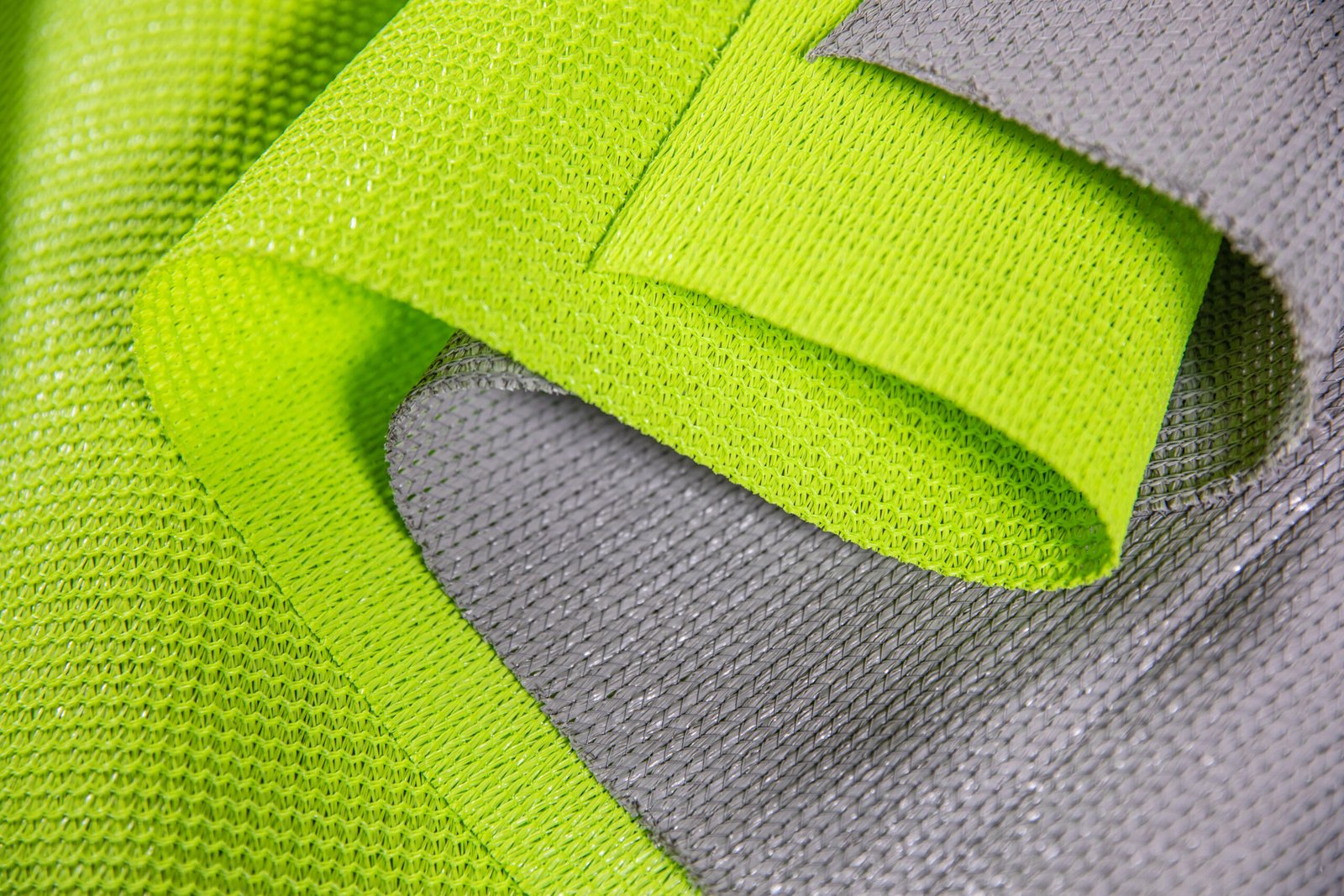 Young Shade Sail HDPE Shade Fabric
- Acrylic fabrics are widely used in residential awnings because they provide excellent color retention and UV protection.
- Polyester fabrics with PVC coatings offer improved water resistance and structural stability, making them suitable for certain commercial applications.
- However, many modern outdoor shading systems now use high-density polyethylene (HDPE) fabrics due to their excellent balance between durability, breathability, and UV resistance. HDPE fabrics allow airflow while blocking a significant portion of solar radiation, helping reduce heat accumulation under the canopy.
4. Fabric Color Selection and Expected Lifespan
- The color of a retractable shade canopy significantly influences both its thermal performance and visual appearance. Darker fabrics tend to absorb more sunlight, which can create a warmer shaded area and provide stronger glare reduction—ideal for patios or decks where sun control is a priority. Lighter fabrics, on the other hand, reflect more solar energy, keeping shaded areas cooler and brighter, making them suitable for poolside lounges or outdoor dining spaces.
- Beyond color, the lifespan and durability of a retractable shade canopy are primarily determined by material quality, fabric weight, and UV stabilization. High-quality outdoor fabrics often feature special coatings or treatments that resist fading, tearing, and mildew, allowing them to maintain performance for 8–15 years depending on sun exposure, climate, and environmental conditions. Additionally, reinforced stitching, fade-resistant dyes, and water-repellent finishes can further enhance longevity, ensuring the canopy remains functional and visually appealing over time.
Choosing the right combination of color, material, and protective treatments can optimize both comfort and aesthetics, providing long-lasting shade that suits the intended outdoor environment.
Part 4: Can You Install a Retractable Sun Shade Yourself?
Many homeowners wonder whether installing a retractable sun shade is a DIY-friendly project or if professional installation is required. The answer depends on the size of the system, the mounting surface, and whether the unit is manual or motorized.
Small retractable awning for house installations designed for compact patios or balconies can often be installed by two people with basic tools. However, larger retractable shade systems or motorized installations typically require professional assistance to ensure structural safety and proper alignment.
Improper installation can lead to uneven fabric tension, frame instability, or long-term structural damage to the building facade.
Below is a simplified overview of the installation process.
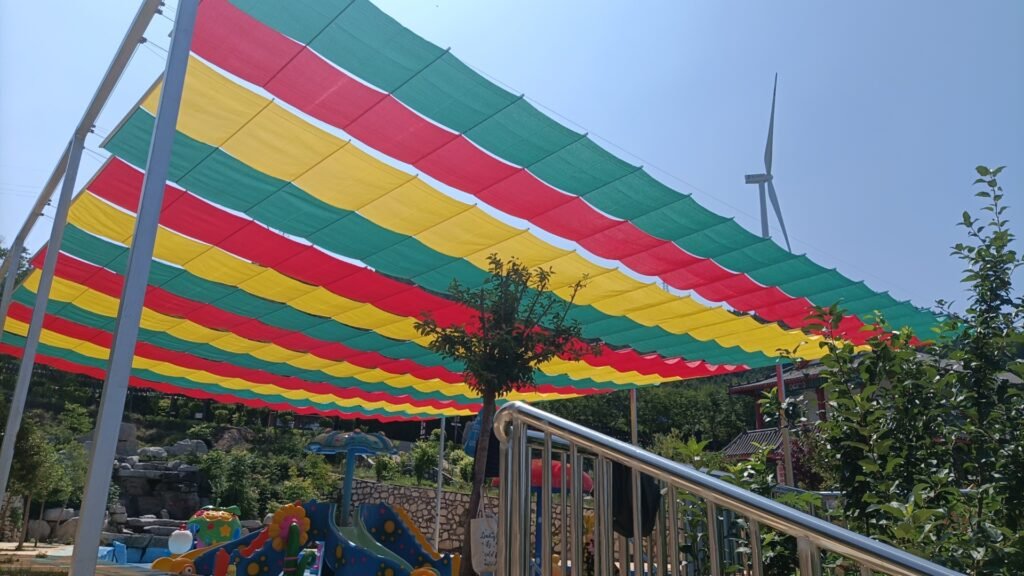 Retractable Sun Shade Support Structures
- Step 1: Measure the Installation Area : Measure the width and length of the area to be shaded, such as a poolside, playground, or patio. Accurate measurements ensure the canopy provides full coverage and avoids interfering with slides, walkways, or existing structures.
- Step 2: Identify and Prepare Support Structure: Determine the locations of sturdy support points for the canopy, such as steel posts, reinforced beams, or concrete walls. All anchor points must be strong enough to bear the tension of the stretched fabric.
- Step 3: Install Mounting Frames or Posts: Secure the metal frames or posts using expansion bolts or structural anchors. Ensure frames are perfectly vertical and aligned to support the canopy evenly.
- Step 4: Attach Fabric to Frame: Lift the canopy fabric onto the frame and attach it to the support points using cables, ropes, or pulley systems. For large installations, multiple workers or lifting equipment may be required to stretch the fabric evenly.
- Step 5: Adjust Tension and Alignment: Tighten cables or ropes to create uniform tension across the canopy. Check that the fabric is straight, wrinkle-free, and properly aligned over the shaded area.
- Step 6: Safety and Final Inspection: Ensure all connections are secure and anchors are firmly fixed. Inspect for any sagging or loose points, and make adjustments as necessary. The canopy should be stable under wind and sunlight conditions.
Part 4: Where to Buy a Reliable High-Quality Retractable Sun Shade?
When purchasing a retractable shade outdoor system, selecting the right manufacturer is just as important as choosing the right design. High-quality materials, precise fabrication, and reliable structural engineering all determine the long-term durability of the system.
Professional Retractable Sun Shade Manufacturer
YoungShadeSail is a professional manufacturer specializing in advanced outdoor shading and protection systems. The company operates a dedicated production factory equipped with precision warp-knitting machinery and industrial HDPE material processing lines, enabling stable large-scale manufacturing and consistent fabric quality.
With years of experience in shade engineering and textile production, YoungShadeSail supplies shading solutions for residential, commercial, and landscape projects worldwide. The company focuses on combining durable materials, structural reliability, and custom design capability to meet the requirements of modern outdoor architecture.
Product Strength of YoungShadeSail Retractable Sun Shade Systems
- Industrial-grade HDPE shade fabrics: The shading fabrics are manufactured from high-density polyethylene materials with UV stabilization technology. These fabrics maintain structural strength and color stability under prolonged sunlight exposure while allowing airflow to reduce heat buildup.
- Custom retractable awning design capability: The company provides flexible design solutions for patios, decks, balconies, and commercial outdoor spaces. Custom sizing, mounting structures, and fabric options allow each retractable sun shade system to match specific architectural requirements.
- Reinforced structural hardware: All systems use reinforced stitching and corrosion-resistant stainless-steel hardware to ensure durability under wind load and daily mechanical operation.
- Large-scale manufacturing capacity: Because YoungShadeSail operates its own factory, it can support bulk production for residential developments, commercial installations, and international distribution projects.
Frequently Asked Questions About Retractable Sun Shades
Conclusion
Retractable sun shade systems have become an essential component of modern outdoor living design. By allowing homeowners to control sunlight exposure, these adjustable shading solutions transform patios, decks, and garden seating areas into comfortable environments throughout the day.
Choosing the right retractable sun shade involves evaluating structural design, fabric durability, installation requirements, and manufacturer reliability. With high-quality materials and professional manufacturing expertise, systems like those produced by YoungShadeSail provide long-term shading performance and architectural flexibility for residential and commercial outdoor spaces alike.