Gardening is no longer only about planting and harvesting. Across many regions, growers are facing increasing environmental and biological pressure. According to the Food and Agriculture Organization, climate-related agricultural losses have risen significantly over the past decade. At the same time, data from the United States Department of Agriculture shows that wildlife damage continues to cause measurable crop loss each year in both residential and commercial growing environments.
In this context, the question is no longer whether you should protect your garden — but how to do it effectively and sustainably.
This article explores the most common threats modern gardens face, evaluates practical garden protection ideas from DIY methods to professional systems, and explains why advanced HDPE protection technology offers a long-term solution for upgrading garden resilience, yield stability, and fruit quality.
Part 1: What Are the Most Common Threats to Your Garden?
Animal intrusion causes consistent structural and crop damage
Birds feed on ripening fruit. Squirrels destroy seedlings and dig around root systems. Rabbits and deer strip leaves and bark. Garden protection from animals must address climbing, digging, and aerial access simultaneously. Traditional fencing systems typically fail because they protect only at ground level.
Hail events create immediate and irreversible crop loss
Garden hail protection is increasingly necessary in regions experiencing unstable weather cycles. Hail can destroy fruit buds within minutes, reducing both yield and fruit grade. Even moderate hail exposure can weaken plant tissue, making crops more vulnerable to disease.
Insects, frost, and sun exposure reduce yield quality
Insect pressure increases pesticide dependency. Frost damage affects early blossoms and delays harvest cycles. Excessive heat causes sunburn on fruit surfaces, lowering market value. Without proper garden bed protection, growers experience inconsistent output and reduced profitability.
Part 2: 4 Practical Garden Protection Ideas for Modern Growers
Effective garden protection ideas must be evaluated not only by upfront cost, but by durability, performance consistency, and long-term return on investment.
| Method | Initial Cost | Lifespan | Weather Resistance | Animal Protection | Long-Term Efficiency |
|---|
| DIY fencing | Low | Short | Weak | Partial | Low |
| Plastic sheet covers | Low | Very short | Poor UV resistance | Limited | Very Low |
| Greenhouse systems | High | Long | Strong | Strong | Medium (high operating cost) |
| HDPE Protection Net System | Moderate | Up to 15 years | High | Comprehensive | High |
DIY fencing can reduce large-animal access but does not prevent birds or climbing wildlife. Plastic sheets degrade quickly under UV exposure and often trap excessive heat, which can stress plants. Greenhouses provide full enclosure but require high capital investment, structural maintenance, and often generate internal heat accumulation.
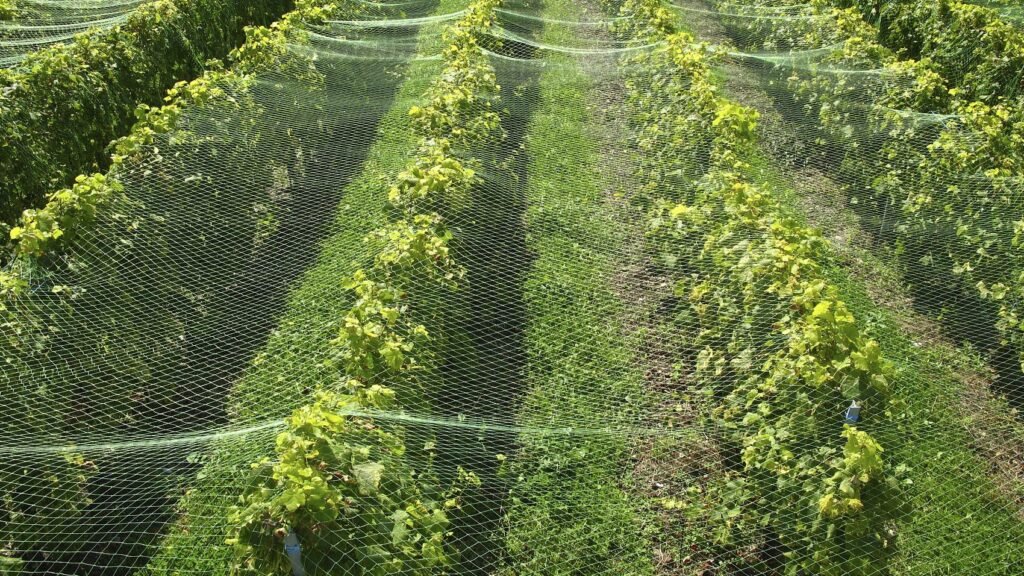
HDPE agricultural protection net systems represent a balanced structural solution. They provide multi-directional protection without blocking airflow or sunlight. Over time, their durability significantly lowers per-year cost compared to temporary materials.
Part 3: What Is the Most Effective Garden Protection System?
For growers seeking long-term reliability, the most effective solution is a professional multi-functional agricultural protection net system.
YoungShadeSail Multi-Functional HDPE Garden Protection Net
YoungShadeSail specializes in advanced garden protection systems engineered for fruit trees, orchards, and high-value crops. Our multi-functional protection net is manufactured using high-density polyethylene (HDPE) combined with advanced warp-knitting technology.
Unlike ordinary plastic materials, HDPE provides superior hardness, tensile strength, and creep resistance. The monofilament tensile strength can reach up to 28N, delivering high tear resistance and wind stability. Its temperature tolerance ranges from -40°C to 70°C, allowing stable performance across extreme climates.
UV stabilizers are integrated directly into the material matrix, not applied as surface coatings. This significantly improves anti-aging performance and enables a service life of up to 15 years. The material maintains structural integrity under prolonged sun exposure while offering excellent waterproof and anti-mold performance.
The net structure is compact yet breathable, with a shading coefficient between 18% and 40%. This allows sufficient light transmission while reducing sunburn risk. At the same time, it does not create greenhouse heat accumulation, eliminating additional energy consumption.
_来自小红书网页版-1024x576.jpg)
The Impact of Multi-functional Garden Protection Net:
- Protection against birds, hail, insects, and strong winds: The reinforced mesh structure creates a stable physical barrier that reduces direct crop damage without blocking airflow.
- Reduced pesticide usage: By limiting insect intrusion naturally, growers can lower chemical dependency and improve overall crop safety.
- Improved fruit appearance and market grade: Minimizing surface damage leads to more uniform fruit quality and higher commercial value.
- Lower frost risk in low-lying areas: The net helps moderate sudden nighttime temperature drops, supporting more stable growing conditions.
- Controlled crop maturation timing: Adjustable shading rates allow better regulation of sunlight exposure and harvest scheduling.
- Suitability for dense orchard planting: Its lightweight yet high-strength design makes large-area coverage efficient and structurally practical.
Compared to greenhouse construction, the unit-area cost is significantly lower, and installation is more adaptable for large-scale orchards.
About YoungShadeSail: Professional Agricultural Protection Manufacturer
YoungShadeSail is a professional manufacturer specializing in advanced agricultural and garden protection systems. With years of focused experience in the agricultural protection sector, we have continuously refined our materials, structures, and production standards to meet evolving industry demands. We own and operate a dedicated production factory equipped with precision warp-knitting machinery and industrial-grade HDPE extrusion lines, enabling stable large-scale manufacturing and consistent mesh quality.
Our factory integrates raw material processing, knitting, cutting, and finishing within one controlled production system. This allows us to maintain strict quality control, stable UV stabilization standards, and reliable bulk supply for commercial orchards and agricultural projects worldwide.
Our expertise focuses on large-scale orchard systems, fruit tree protection projects, and global distribution partnerships. With strong bulk production capacity, we support commercial farms, agricultural distributors, and regional project contractors.
Our technical strength lies in:
- In-house material formulation and UV stabilization control
- Advanced knitting structure design for structural tension balance
- Customizable shading rates and mesh densities
- Stable bulk supply with consistent quality control
FAQ
Conclusion
To protect your garden today means building resilience against recurring environmental and biological risks. Temporary fixes no longer match the structural demands of modern growing conditions. Upgrading to a professional HDPE protection system from YoungShadeSail transforms garden protection into a long-term agricultural investment — stabilizing yield, improving fruit quality, reducing operational risk, and enhancing overall production efficiency for years to come.