Outdoor living has become a central part of modern home design, with patios, gardens, and outdoor seating areas increasingly used as extensions of indoor space. As a result, the demand for high-quality outdoor fabric has grown significantly across residential and commercial applications.
However, not all outdoor fabrics are built to perform under long-term exposure to sun, wind, and moisture. Choosing the right material is essential for ensuring durability, comfort, and long-term value. This guide explains what outdoor fabric is used for, which materials perform best, what makes a fabric durable, and how to select a reliable supplier for long-term outdoor applications.
Part 1: What Is Outdoor Fabric Used For?
Outdoor fabric is specifically engineered to withstand environmental exposure that would quickly damage standard indoor textiles. Unlike conventional materials, it is designed to resist ultraviolet radiation, moisture, temperature fluctuations, and mechanical wear.
Because of these properties, outdoor fabric is widely used across multiple applications:
1. Outdoor Fabric for Cushions
One of the most common uses of outdoor fabric for cushions is in patio seating and lounge furniture. These fabrics must balance durability with comfort, offering resistance to fading and moisture while maintaining a soft surface suitable for daily use.
High-quality cushion fabrics often feature UV stabilization and water-resistant coatings, ensuring they retain color and structure even after prolonged exposure to sunlight and rain.
2. Outdoor Fabric for Outdoor Furniture
Outdoor furniture requires fabrics that can withstand continuous environmental stress. Outdoor fabric for outdoor furniture is typically used in seating surfaces, sling chairs, and protective covers.
These fabrics must maintain structural integrity under tension while resisting mold, mildew, and temperature changes. Durability is particularly important in regions with strong sunlight or high humidity.
3. Outdoor Fabric for Patio Furniture
Outdoor fabric patio furniture applications combine both aesthetic and functional requirements. In addition to durability, the fabric must complement the overall design of the patio space.
This includes resistance to fading, consistent color performance, and the ability to maintain shape over time, even with frequent use.
4. Shade Structures and Protective Systems
Beyond furniture, outdoor fabric plays a critical role in shade systems and protective structures, such as shade sails and shade canopy installations.
In these applications, performance requirements are significantly higher. The fabric must provide:
- high UV blocking capability
- strong tensile strength
- long-term resistance to environmental degradation
This is where high-performance materials like HDPE are most commonly used.
Part 2: What Is Outdoor Fabric Used For?
Selecting the best outdoor fabric depends on the specific application, environmental conditions, and performance requirements. The most widely used materials include HDPE, acrylic fabrics, and polyester-based fabrics.
1. HDPE Fabric
High-Density Polyethylene (HDPE) is one of the most durable materials used in outdoor environments. It is widely applied in shade systems, agricultural protection, and structural outdoor installations.
HDPE fabric is engineered for long-term exposure and offers:
- excellent UV resistance
- high tensile strength
- breathable structure for airflow
- resistance to mold and moisture
Because of these characteristics, HDPE is often considered the best choice for applications where durability and structural performance are critical.
2. Acrylic Fabric
Acrylic fabrics, are commonly used for cushions, upholstery, and decorative outdoor elements.
These fabrics are valued for:
- color retention and fade resistance
- soft texture suitable for seating
- good water resistance
While acrylic fabrics perform well in residential settings, they are generally less suitable for high-tension or structural applications compared to HDPE.
3. Polyester and PVC-Coated Fabrics
Polyester-based outdoor fabrics are often used in covers, temporary structures, and budget-friendly applications.
They offer:
- moderate durability
- water resistance (especially when coated)
- cost efficiency
However, they typically have lower UV resistance and shorter lifespan compared to HDPE and acrylic materials.
Material Comparison
| Fabric Type | UV Resistance | Durability | Best Use |
|---|
| HDPE | Very High | Excellent | Shade systems, structural use |
| Acrylic | High | High | Cushions, seating |
| Polyester | Medium | Medium | Covers, temporary use |
Part 3: How to Choose the Durable Outdoor Fabric?
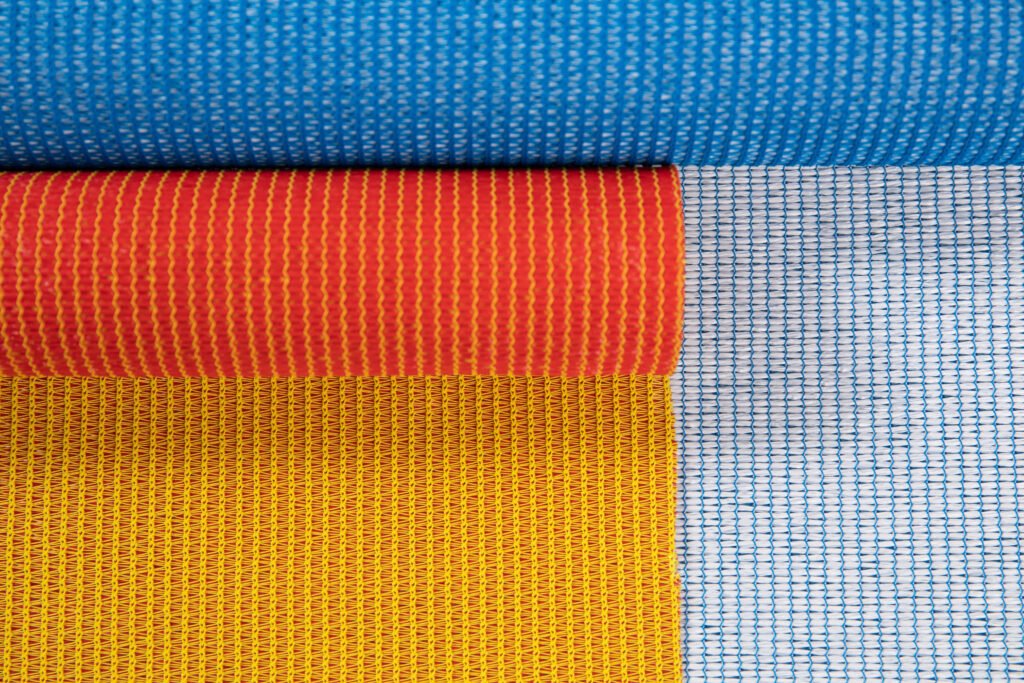 Young Shade Sail- Outdoor HDPE Shade Fabric
A durable outdoor fabric is defined not simply by thickness or cost, but by its ability to maintain performance under continuous environmental stress over time.Several key factors determine durability:
- UV Resistance:Ultraviolet radiation is the primary cause of fabric degradation in outdoor environments. A durable outdoor fabric must include UV stabilizers or inherent resistance to sunlight to prevent fading, brittleness, and structural breakdown.
- Tensile Strength and Tear Resistance: Outdoor fabrics are often exposed to wind loads and mechanical tension. High tensile strength ensures the fabric can resist stretching, tearing, and deformation under stress.
- Water and Mold Resistance: Moisture exposure can lead to mold growth and material weakening. Durable outdoor fabrics must resist water penetration and allow for proper drying to prevent long-term damage.
- Temperature Stability: Outdoor environments involve constant temperature changes. A high-performance fabric must remain stable in both high heat and cooler conditions without cracking or losing flexibility.
Part 4: What Is the Best Outdoor Fabric Company?
Choosing the right supplier is just as important as selecting the right material. A reliable manufacturer ensures consistent quality, proper material processing, and long-term product performance.
YoungShadeSail is a professional manufacturer specializing in outdoor fabric and protection systems, with a strong focus on HDPE-based solutions.
The company offers several key advantages:
- Owned production facility ensuring stable large-scale supply
- Advanced warp-knitting machinery for consistent fabric quality
- Expertise in HDPE materials for long-term outdoor performance
- Custom design capability for various applications
- Extensive project experience across residential and commercial environments
These capabilities allow YoungShadeSail to provide reliable outdoor fabric solutions tailored to different project needs.
Frequently Asked Questions About Outdoor Fabric
What fabric is best for outdoor use?
The best outdoor fabric depends on the application. HDPE fabric is ideal for shade and structural use, while acrylic fabrics are better suited for cushions and seating.
What is a durable outdoor fabric?
A durable outdoor fabric is one that resists UV exposure, moisture, and mechanical stress over time, maintaining both performance and appearance.
How long does outdoor fabric last?
High-quality outdoor fabrics can last between 10 to 15 years depending on material type, environmental conditions, and installation quality.
What is the best outdoor fabric for patio furniture?
For patio furniture, acrylic fabrics are commonly used for comfort, while HDPE fabric is preferred for shade structures and protective systems.
Conclusion
Choosing the right outdoor fabric is essential for achieving long-term performance in outdoor environments. By understanding material differences, durability factors, and application requirements, it becomes easier to select the most suitable solution. Among available options, HDPE fabric stands out as the most reliable choice for demanding outdoor conditions, offering superior durability, UV resistance, and structural performance.
For projects requiring consistent quality and long-term reliability, working with a professional manufacturer such as YoungShadeSail ensures that outdoor fabric solutions meet both performance and design expectations.