The World Economic Forum’s Global Risks Report 2026 identifies extreme weather as a top long-term threat to critical infrastructure worldwide — and the commercial built environment is feeling it directly. Hospitality operators, school districts, and urban developers are no longer treating weather-resilient outdoor structures as a nice-to-have. They’re a baseline requirement. Waterproof shade sails sit at the intersection of that demand: structurally adaptable, cost-effective, and — when specified correctly — genuinely built to perform in all conditions.
The problem is that “waterproof” has become one of the most abused terms in the shade industry. It’s printed on budget garden sails and engineering-grade commercial canopies alike — and most buyers only discover the difference when a seam fails mid-season. Wrong product means water damage, rework costs, and lost operating days. This guide gives B2B buyers the technical framework to cut through the noise and get the specification right from day one.
Part 1: What Makes a Shade Sail Truly Waterproof?
The most common mistake in shade sail procurement is treating “UV-blocking” and “waterproof” as the same thing. Standard HDPE (High-Density Polyethylene) shade sails — the type that makes up the majority of the market — are knitted mesh fabrics. They block UV effectively, but water passes straight through the weave. If your project needs to stay operational during rain, a standard HDPE sail will fail you.
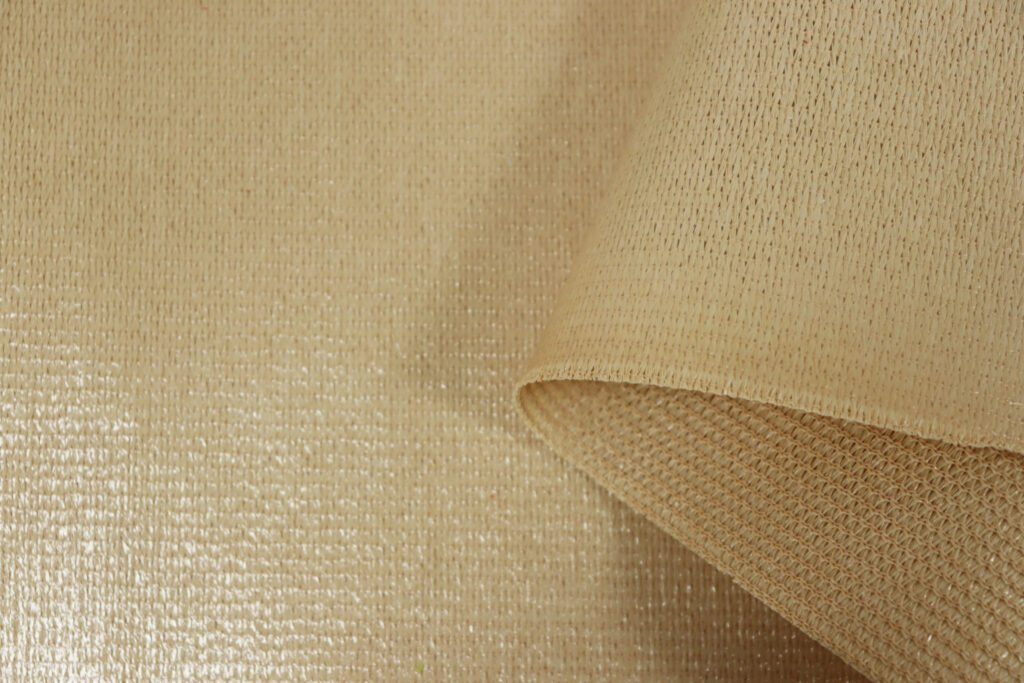
That said, not all HDPE is equal. Our waterproof shade sails use a laminated HDPE construction: the same high-performance HDPE base fabric, bonded with a waterproof membrane layer that seals the weave completely. The result is a sail that combines HDPE’s proven UV resistance, dimensional stability, and tensile strength with genuine, full-surface waterproofing — without the rigidity or weight penalty of a solid PVC sheet.
Part 2: How to Choose the Best Waterproof Shade Sail for Your Project?
1. Does Shape Affect Waterproof Performance?
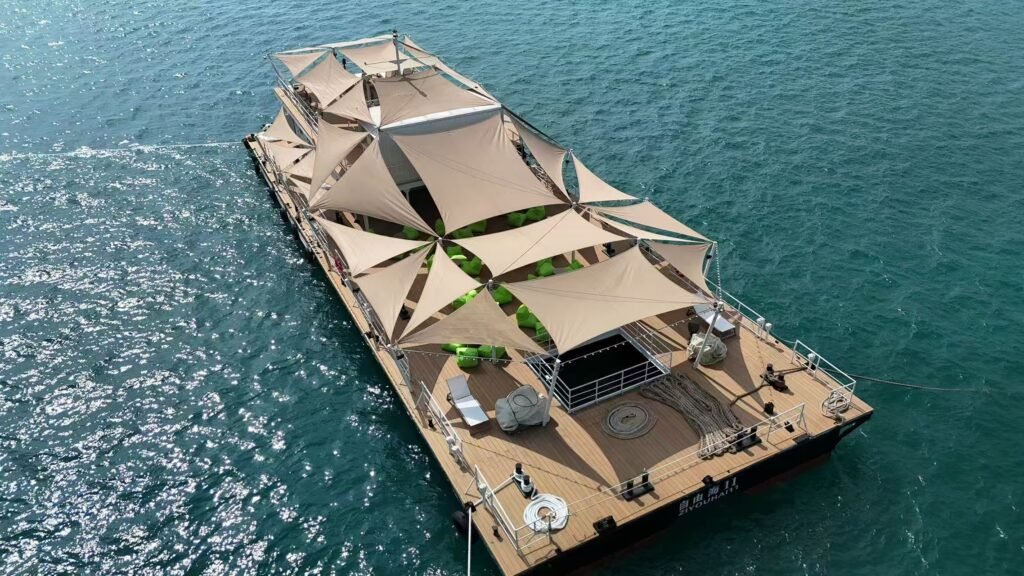
Yes. Triangular sails drain at three corners but can pool centrally if tensioned flat. Quadrilateral sails pitched at 20–30 degrees shed water reliably. Multi-panel configurations need careful engineering to avoid internal pooling. For shape and layout inspiration, see our shade sail design ideas collection.
2. Color and Heat Accumulation
Dark HDPE shade sails absorb significantly more solar radiation, raising ambient temperature underneath. For guest-facing hospitality and public seating environments, light or white fabrics reflect heat more effectively while maintaining full waterproofing — almost always the better commercial choice.
3. Custom Sizing, Branding, and Double-Sided Printing
For hospitality groups and branded commercial environments, a waterproof shade sail is also a visual branding surface. Custom shapes, corporate colour matching, and dual-sided printed graphics turn a functional structure into a signature feature. Our guide to double-sided printed shade fabric covers ink systems, resolution, and fade resistance. For broader deck and terrace specification, see our deck shade selection guide.
Part 3: What Are the RealApplications of Waterproof Shade Sails?
Restaurant and Café Terraces
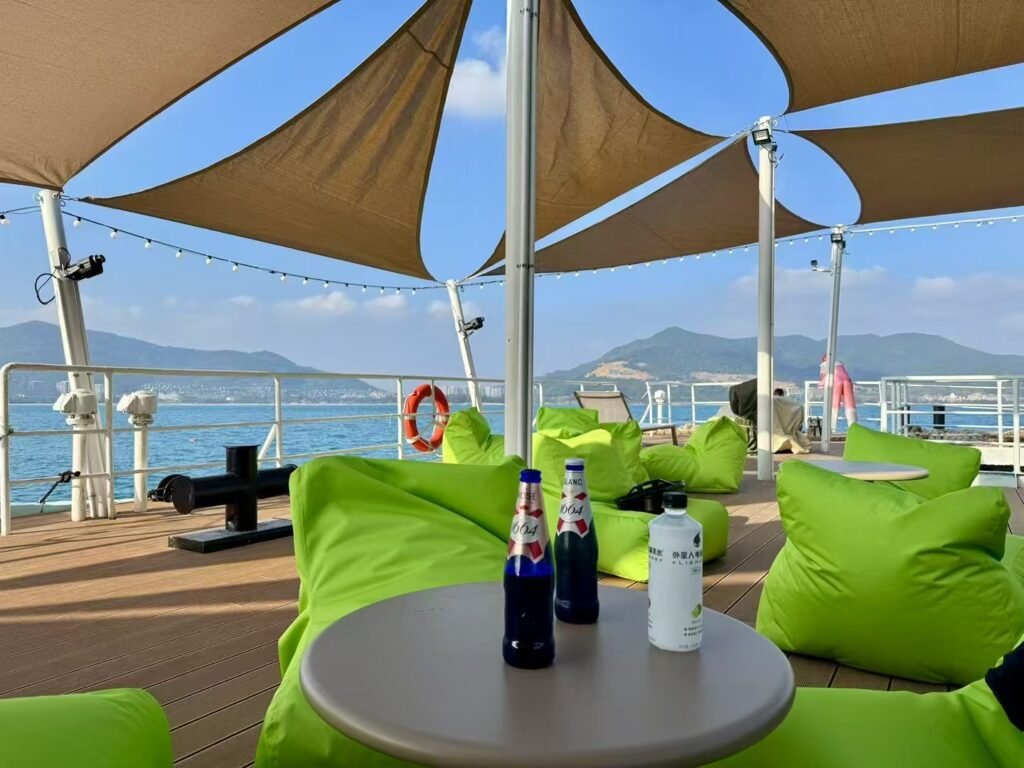
Waterproof shade sails extend the commercial calendar, turning marginal weather days into revenue-generating service periods. Our smart patio design ideas guide covers layout configurations that balance coverage, aesthetics, and customer flow.
Hotel Pool and Spa Areas
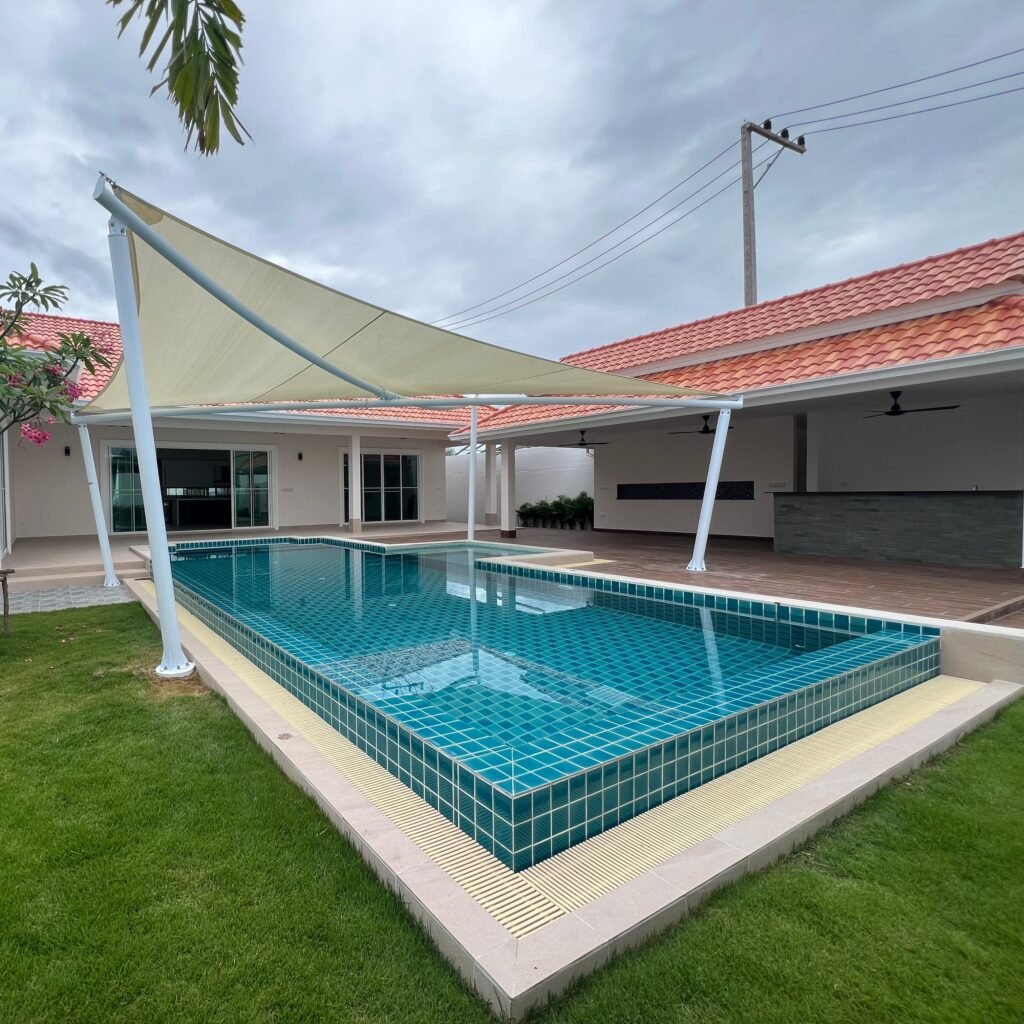
Pool deck environments demand waterproofing, UV protection, and resistance to chlorine vapour. Commercial waterproof shade sails with marine-grade hardware and welded seams are the correct specification — custom shapes and branding integrate seamlessly with resort aesthetics.
Schools and Playgrounds
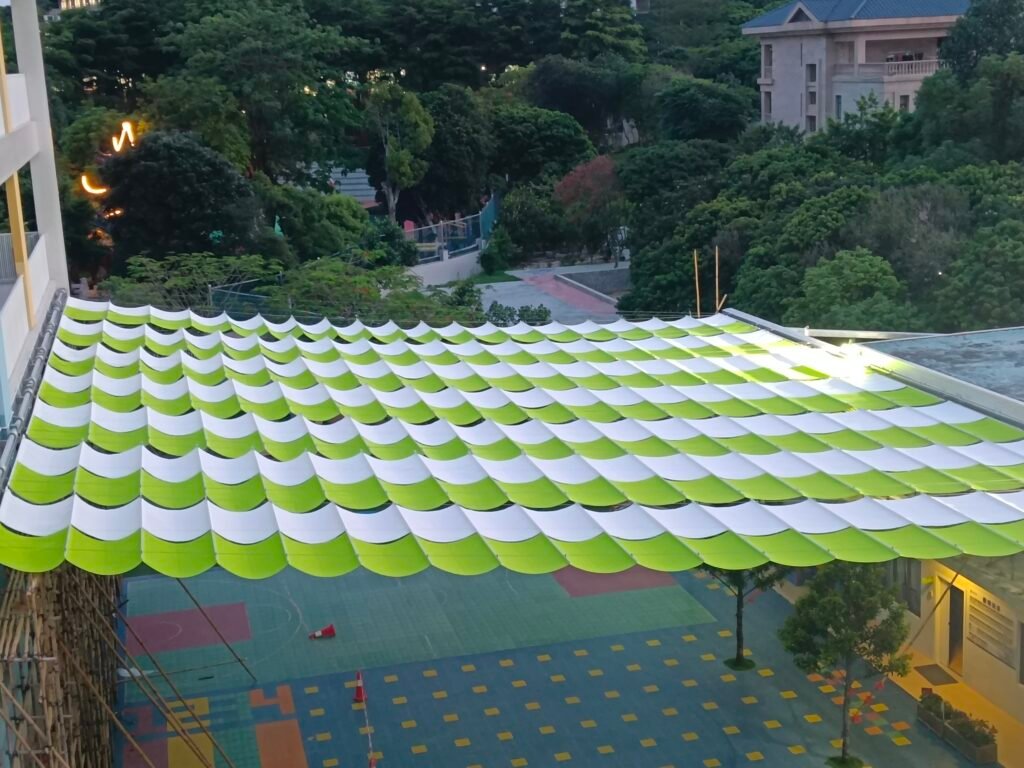
More people recommend UPF 50+ protection for children’s outdoor environments. Waterproof commercial sails extend usability to wet-weather periods and reduce schedule disruption.
Parking and Transit Infrastructure
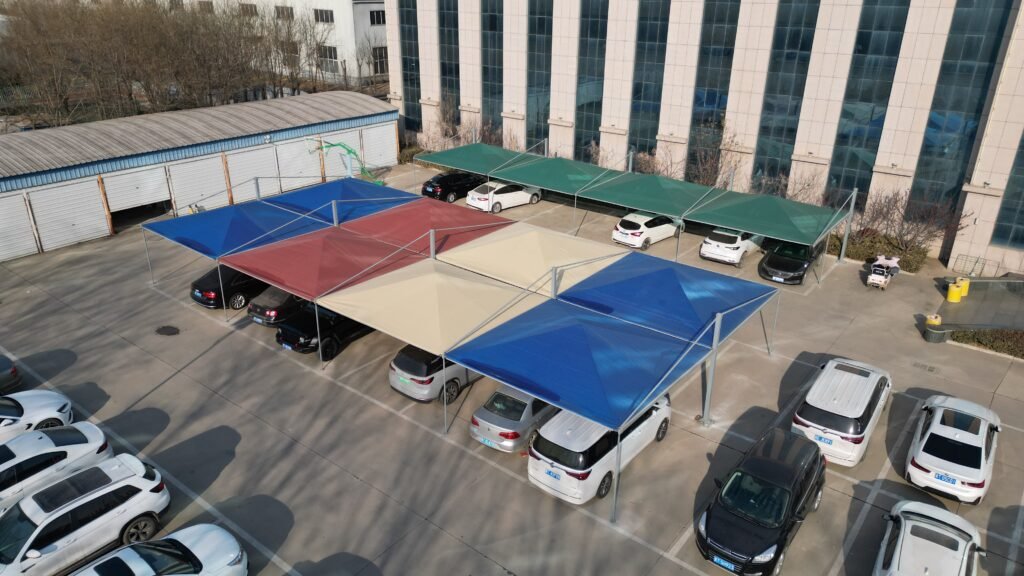
Tensioned membrane solutions offer a cost-effective, low-structural-loading alternative to rigid canopies for parking facilities and transit points. See how shade infrastructure fits into broader public space strategy in our smart urban landscape design resource.
Event Venues and Exhibition Spaces
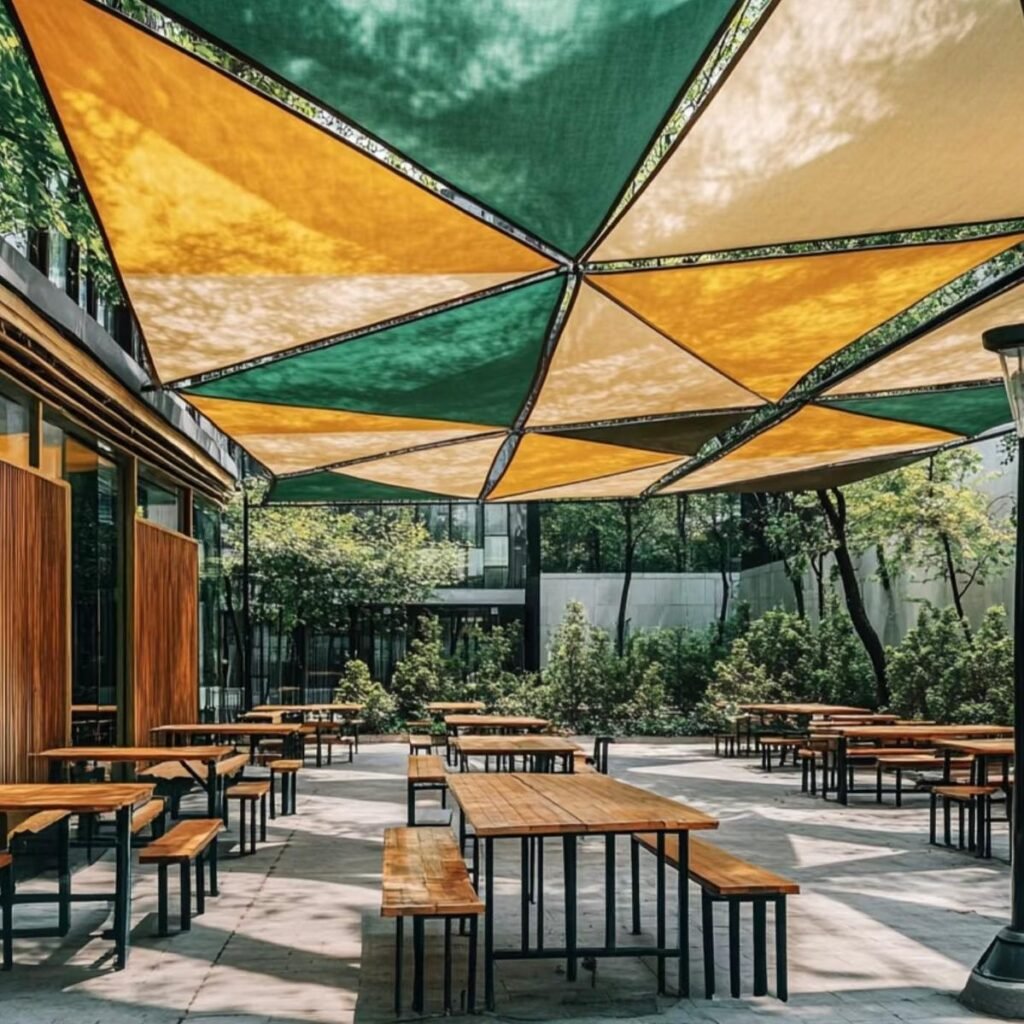
Custom-fabricated waterproof sails with modular fixing systems allow flexible configuration across event formats while maintaining full weather protection.
Part 4: Which Waterproof Shade Sail Manufacturer Is Built for Wholesale Projects?
Young Shade Sail is a specialist manufacturer of commercial-grade shade sails, shade fabrics and any outdoor shade products, supplying distributors, landscape architects, hospitality developers, and infrastructure contractors across global markets. Unlike trading companies or intermediaries, we operate our own production facility — which means full control over material sourcing, fabrication standards, and quality assurance at every stage of production.
For B2B buyers evaluating a long-term supply partner, here is what Young Shade Sail brings to the table:
- Vertically Integrated Manufacturing — Our own factory with industrial cutting, welding, and finishing equipment. No subcontracting. Every sail is manufactured and QC-checked in-house, ensuring consistent output quality across large volume orders.
- Full Custom Fabrication — Any shape, any size, any colour. We manufacture to client-supplied dimensions and specifications with no standard-size limitations. Triangles, quadrilaterals, irregular polygons, and multi-panel configurations are all within scope.
- Commercial-Grade Materials and Construction — We work exclusively with HDPE shade fabrics sourced from verified mills. All waterproof products use RF heat-welded seams, marine-grade 316L stainless steel hardware, and high-tensile edge webbing as standard.
- Print and Branding Capability — In-house and partner-based printing for full-colour dual-sided graphic sails. Suitable for corporate branding, wayfinding, and decorative applications across hospitality and retail environments.
- International Export Experience — We supply clients across Southeast Asia, Australia, the Middle East, Europe, and North America. Our team is familiar with regional compliance requirements, documentation standards (CE, AS/NZS, EN), and freight logistics for containerised and express shipments.
- Reliable Lead Times with Project Scheduling Support — Standard production lead times of 30 working days for custom orders, with expedited options available. We work with project managers to align delivery schedules with installation timelines.
- OEM and ODM Partnership — Full white-label and OEM capability for distributors, branded resellers, and large-scale clients who require product under their own identity. Custom labelling, packaging, and product documentation included.
FAQ — Waterproof Shade Sail Frequently Asked Questions
Are all shade sails waterproof?
No — most are standard HDPE mesh, which blocks UV but lets water straight through. Our waterproof shade sails use a laminated HDPE with a sealed waterproof membrane, delivering full rain protection without sacrificing UV performance.
How long does a waterproof shade sail last?
A commercial-grade PVC sail, properly installed and maintained, typically lasts 10–15 years. Budget-grade products may degrade significantly within 3–5 years under UV and weather exposure.
Can waterproof shade sails withstand heavy rain and strong wind simultaneously?
Yes, within their rated parameters — provided the fixing system, sail pitch, and wind load rating are correctly specified. For large spans in high-wind regions, always involve a structural engineer.
How do I clean and maintain a waterproof shade sail?
Clean periodically with mild detergent and a soft brush; rinse thoroughly and avoid abrasive cleaners that degrade the coating. Before seasonal storage, ensure the sail is completely dry to prevent mould.
Can waterproof shade sails be made in non-standard shapes?
Yes — specialist manufacturers like Young Shade Sail fabricate to virtually any geometry. Accurate site measurements and fixing point coordinates are required for a precise fit.
Conclusion
Selecting a waterproof shade sail is an infrastructure decision with a 10–15 year horizon. Fabric composition, GSM, coating weight, seam construction, and hardware grade are what determine whether a shade sail performs and lasts — or fails and costs far more to replace than it saved upfront. Get the specification right, and a shade sail becomes a durable, revenue-enabling asset.
Young Shade Sail manufactures commercial and heavy-duty waterproof shade sails for B2B clients worldwide. Whether your project is a single bespoke installation or a multi-site procurement programme, our team provides technical specification support, material samples, and competitive commercial pricing.
Talk to our team at youngshadesail.com to discuss your project and request a quote.