Privacy has become a premium commodity in the built environment. From construction site hoardings in downtown Dubai to poolside fencing in Florida subdivisions, the global demand for outdoor privacy screen fabric has surged across every B2B vertical. The global shade net market was valued at over USD 1.2 billion in 2023 and is projected to grow at a CAGR exceeding 5.8% through 2030, driven by rapid urbanization, expanding commercial construction, and heightened consumer expectations around outdoor living spaces (Grand View Research).
For wholesale buyers — whether you’re a distributor, landscape contractor, facility manager, or OEM fabricator — this growth creates both opportunity and sourcing complexity. Not all fabrics perform equally under the sun, wind, or scrutiny of a procurement spec sheet. This guide breaks down every technical variable that matters when ordering privacy screen fabric at scale, so you can source smarter, specify precisely, and avoid the expensive mistakes that come from trusting a vague product listing.
Part 1: What Is an Outdoor Privacy Screen?
A properly specified outdoor privacy screen delivers more than sightline obstruction. Commercial buyers quickly discover it provides a layered set of functional benefits:
- Blocks views — creates visual separation between work zones, pool areas, or construction sites
- Reduces wind load — a well-engineered mesh dissipates wind rather than acting as a solid sail
- Lowers ambient temperature — quality HDPE fabric reduces perceived temperature by 8–12°C beneath the screen
- Provides acoustic buffering — denser weaves reduce high-frequency noise, relevant for construction hoardings and roadside barriers
- Improves site aesthetics — a clean, color-consistent mesh projects professionalism far better than bare chain link or hoarding boards
What Is Outdoor Privacy Screen Made Of?
Every panel is an assembly of four components. Understanding the structure helps buyers ask the right questions:
- Base fabric — knitted or woven HDPE or polypropylene; the primary filter for UV, wind, and views, and the most critical decision point
- Reinforced binding/hem — border tape sewn or heat-welded around the perimeter that distributes tension and prevents fraying; binding thickness is independent of fabric GSM
- Grommets/eyelets — rust-resistant aluminum or stainless steel rings at 300–500 mm spacing for cable tie or bungee attachment
- UV stabilizing additives — compounded into the fiber during extrusion in premium HDPE, consistently outlasting surface-applied coatings
Part 2: How Do You Evaluate Outdoor Privacy Screen Fabric?
1. Is HDPE or Polypropylene Better for Outdoor Privacy Screens?
The two dominant materials are High-Density Polyethylene (HDPE) and polypropylene (PP). Both are thermoplastics with outdoor weathering potential, but their real-world performance diverges significantly:
| Property | HDPE | Polypropylene (PP) |
|---|
| UV resistance | High — retains integrity with stabilizers | Moderate — degrades faster |
| Low-temperature flexibility | Excellent below −30°C | Becomes brittle in deep cold |
| Chemical resistance | Excellent — resists salt, alkali | Good, but limited solvent resistance |
| Typical lifespan outdoors | 10–15 years | 3–5 years (economy grade) |
| Cost at equivalent GSM | Slightly higher | Lower |
For commercial projects with a specified service life of 10+ years, HDPE is the correct specification. Polypropylene dominates the budget segment but carries real risk of UV embrittlement and color fade within three to five years in high-UV environments. Understanding how different fabric constructions perform across applications is covered in depth in Young Shade Sail’s guide to the five main types of shade fabric.
2. What GSM Should You Specify for Commercial Privacy Screen Fabric?
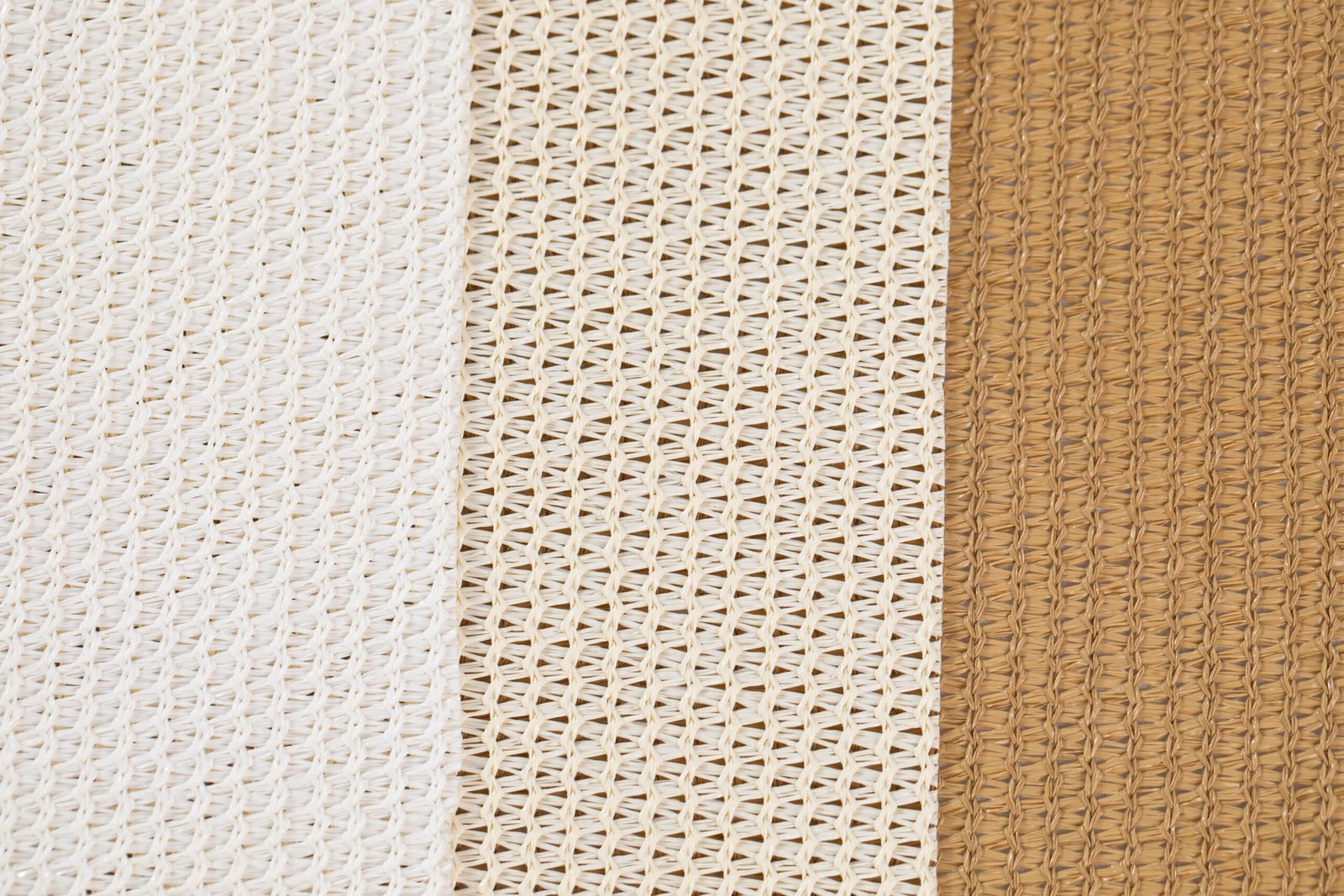
GSM (grams per square metre) measures the mass of the base fabric only — not binding, grommets, or coating. It is a reliable proxy for density, wind resistance, and privacy rate once you understand the ranges:
| GSM Range | Typical Application | Privacy Rate |
|---|
| 200–250 gsm | Residential privacy fences, balcony screens | 75–85% |
| 270–300 gsm | Commercial site hoardings, pool privacy, hospitality | 85–95% |
| 320–340 gsm | High-wind environments, telecom compounds, industrial fencing | 90–95%+ |
Young Shade Sail‘s standard wholesale range covers 200 gsm to 340 gsm, with any custom weight available to order. Always request GSM as a base fabric figure — some suppliers quote finished panel weight including binding hardware, inflating the apparent density.
3. How Long Should Outdoor Privacy Screen Fabric Last?
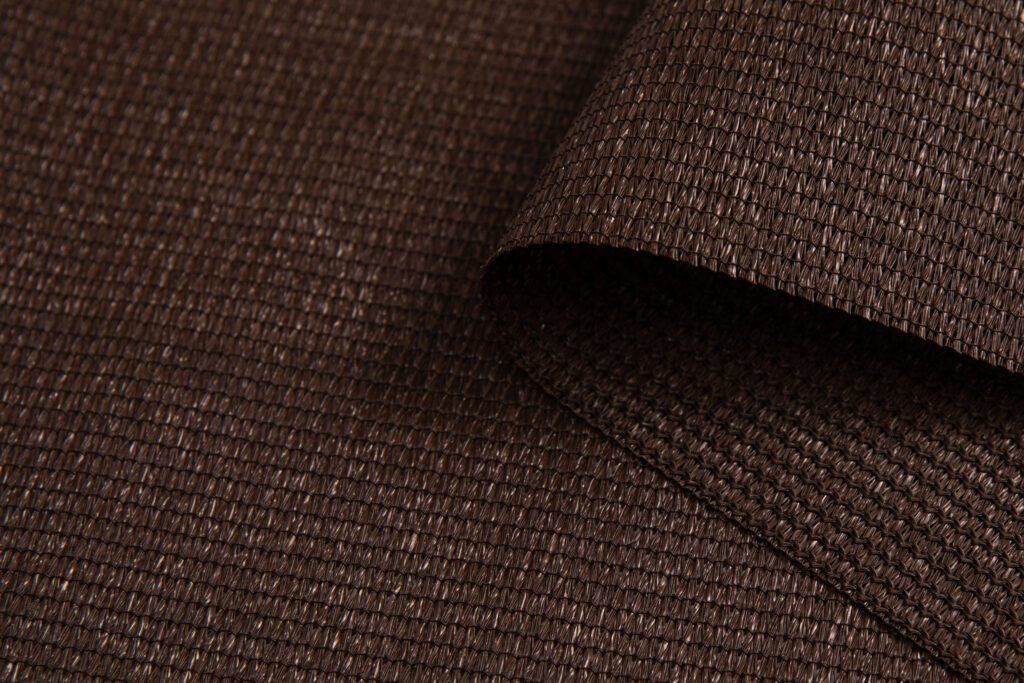
Lifespan is determined by UV stabilizer loading, measured in kilolangleys (kly) of cumulative UV exposure the fabric withstands before mechanical properties degrade. The standard test is ASTM G154 accelerated weathering. Fabrics rated ≥2,000 kly typically deliver 10+ years in high-UV environments. Budget fabrics often carry no kly rating at all.
The contrast between tiers is significant: economy PP or lightly stabilized HDPE lasts 3–5 years before UV embrittlement causes cracking and grommet pullout. Young Shade Sail’s HDPE fabric is engineered for up to 15 years of outdoor service life, maintaining 65–85% color vibrancy throughout. Over a 15-year facility program, that eliminates two full replacement cycles — a factor that changes total cost of ownership dramatically at scale.
4. Can Outdoor Privacy Screen Fabric Withstand High Winds?
Three factors determine wind resistance:
- GSM and knit density — higher density distributes wind force more evenly across the panel
- Porosity — fabric that allows some air through reduces net force per unit area; specifying 95% privacy on a long exposed fence run can actually increase failure risk
- Grommet spacing — specify ≤400 mm for sites with regular sustained winds above 50 km/h
Young Shade Sail fabric is tested to withstand Force 10 (Beaufort Scale) wind conditions — sustained winds of 89–102 km/h. The fabric also provides dual wind-and-sand resistance, engineered for desert environments where fine silica abrasion adds a second failure mechanism on top of UV load. A recent deployment for Huawei telecommunications base station perimeter fencing in Saudi Arabia confirmed zero mechanical failure, zero grommet pullout, and consistent color after 24 months of combined Force 8–10 winds and high UV exposure.
Choosing the right fabric for extreme outdoor conditions starts with understanding material differences — the full breakdown is in Young Shade Sail’s guide to how to choose the best outdoor fabric.
Part 3 :Young Shade Sail: Factory-Direct Outdoor Privacy Screen Fabric from China
Young Shade Sail is a China-based manufacturer, supplier, and direct exporter of HDPE outdoor privacy screen fabric, shipping to wholesale buyers and project contractors in 40+ countries. We own the factory, run the production lines, and ship direct — no middlemen, no resellers, no markup between our floor and your door.
Key capabilities for B2B buyers:
- Direct Manufacturing: Fully CNC-controlled production lines with end-to-end in-house capacity — from raw fiber extrusion through knitting, dyeing, cutting, binding, and inspection. Built for unlimited customization and large-volume orders without lead time surprises.
- Quality & Certification: All products are SGS certified and meet international testing standards. Every batch is tested for tensile strength, tear resistance, UV stability, and colorfastness before it leaves the facility.
- Performance: Fabric engineered for up to 15 years of outdoor service life. Force 10 wind rated. Reduces ambient temperature by 8–12°C. Proven across extreme environments including high-UV desert deployments in the Middle East.
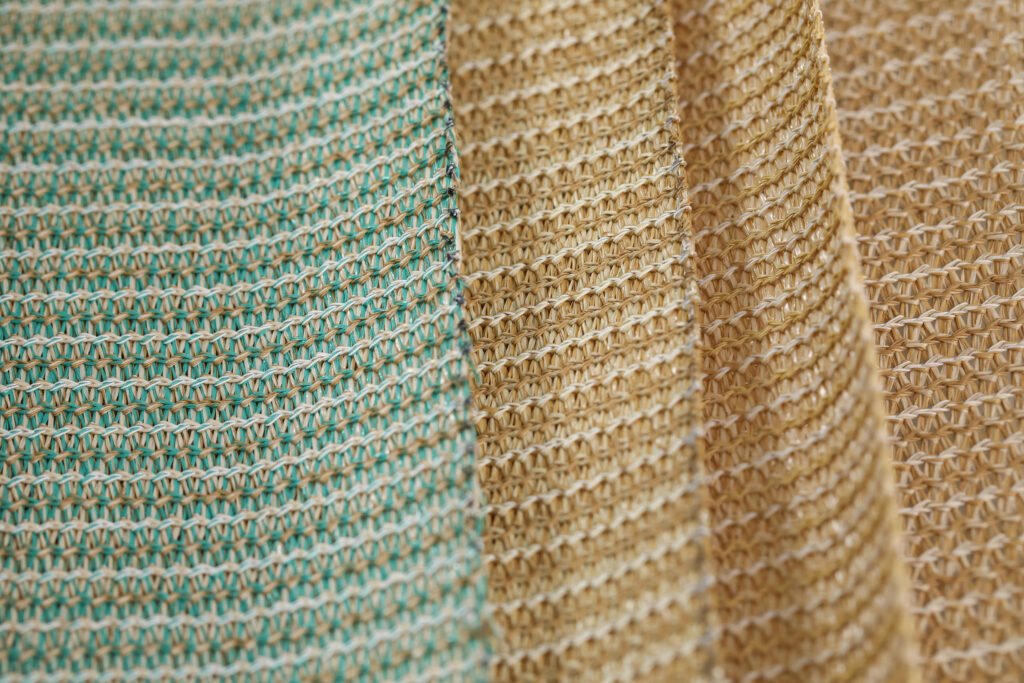
- Customization: 200–340 gsm standard range with custom weights available; 50–95% privacy rate; 30+ stock colors including exclusive pink and purple; Pantone-matched custom colors; FR-treated and custom print variants available. Browse the full HDPE shade fabric range to see standard options.
Frequently Asked Questions About Outdoor Privacy Screen Fabric
What is the difference between privacy screen fabric and shade cloth?
Both are typically HDPE, but privacy screen fabric is specified at higher GSM and blockage rates (85–95%) for sightline obstruction, while shade cloth prioritizes UV filtration at lower GSM. Many products serve both functions.
What is the MOQ for wholesale orders?
MOQ varies by product and customization level. Standard stock colors typically have lower MOQs than custom Pantone orders. Contact Young Shade Sail for project-specific confirmation.
How is the fabric attached to a fence?
Cable ties, bungee cords, or galvanised wire through the grommets. Use ≤300 mm grommet spacing and stainless fixings for high-wind or coastal sites.
Does higher GSM always mean better privacy?
Not directly. Privacy rate depends on knit density and yarn packing, not mass alone. Always request the privacy rate as a separately stated specification.
Conclusion
This guide has walked through everything that determines outdoor privacy screen fabric performance — material choice, GSM, UV lifespan, wind load ratings, and privacy rate — so wholesale buyers can specify with confidence and avoid mistakes.
Whether you are specifying fabric for a construction hoarding, a telecom compound perimeter, or building a long-term import program, Young Shade Sail provides factory-direct pricing, technical specification support, and 24-hour quote turnaround. Importers, distributors, and regional agents are welcome to inquire about wholesale partnership terms.
Contact Young Shade Sail to Request a Quote or Partnership →