Bird damage is a common challenge for gardeners, fruit growers, and commercial farms. As fruits ripen, birds may peck at cherries, berries, grapes, and other crops, reducing their market value and increasing crop losses. For growers who need to protect plants without relying entirely on visual deterrents, bird netting offers a practical physical barrier.
Choosing the right bird netting fabric involves more than covering plants with a mesh. The material, mesh size, net dimensions, and installation method all affect how well the netting works in different environments. A small garden may need a lightweight net that is easy to handle, while a commercial orchard may require heavy-duty bird netting designed for larger coverage areas and repeated seasonal use.
This guide explains the purpose of bird netting, the main types of netting fabric, and how to choose suitable options for gardens, fruit trees, and agricultural applications. It also covers the key considerations for buyers sourcing bird netting for commercial projects and wholesale distribution.
Part 1: How Does Bird Netting Protect Crops and Prevent Bird Damage?
1. Preventing Physical Damage and Crop Loss
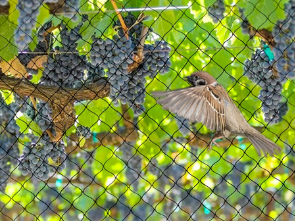
Birds can consume seeds, peck at produce, damage emerging plants, and leave marks that reduce the commercial value of harvested crops. Bird netting helps minimize these losses by separating birds from vulnerable plants during critical growth and ripening stages. For growers, the goal is not simply to keep birds away, but to preserve usable yield and reduce losses that affect profitability.
2. Providing a Physical Alternative to Bird Deterrents
Reflective objects, sound devices, and other deterrents may provide temporary results, but their effectiveness can vary with bird species, environmental conditions, and repeated exposure. Bird netting uses a physical exclusion method rather than relying on birds to react to a stimulus. When correctly specified and installed, it can provide more consistent protection without requiring the same type of repeated deterrent response.
3. Allowing Airflow, Light, and Water to Pass Through
Unlike solid covers, appropriately designed bird netting allows air and sunlight to reach plants, while rainfall and irrigation can generally pass through the mesh. This makes it suitable for crop protection where maintaining normal growing conditions is important. The balance between exclusion performance and airflow depends on mesh size, fabric construction, and net density.
Part 2: What Are the Main Types of Bird Netting Fabric?
1. HDPE Bird Netting
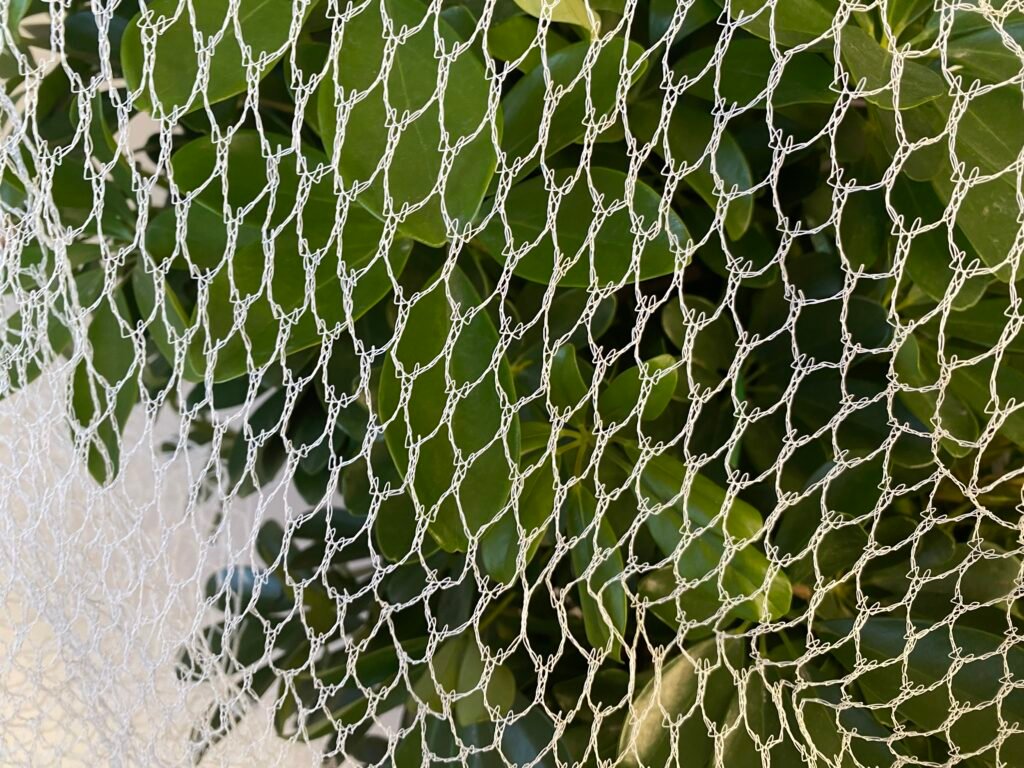
High-density polyethylene (HDPE) is one of the most common materials for outdoor agricultural bird netting. It is lightweight, resists moisture and rot, and can be manufactured into flexible knitted or knotted mesh. With appropriate UV stabilizers, HDPE netting can withstand prolonged outdoor exposure, making it suitable for seasonal crop protection and larger agricultural installations.
2. Polypropylene Bird Netting
Polypropylene (PP) is a lightweight synthetic polymer often used in economical mesh products. Its low material cost can make it attractive for temporary or budget-sensitive applications, particularly where the net is installed for a limited period and removed after use. However, untreated polypropylene can deteriorate under prolonged sunlight. Outdoor products should therefore be evaluated for UV stabilization, yarn strength, and resistance to tearing rather than selected on price alone. For buyers comparing PP with HDPE, the expected service life and replacement frequency are important parts of the total cost calculation.
3. Nylon Bird Netting
Nylon, also known as polyamide, is valued for its tensile strength, flexibility, and resistance to impact. Depending on the yarn and mesh construction, nylon netting can withstand considerable handling and mechanical stress, making it useful for applications where toughness is a priority. Nylon can absorb water and may stretch, while untreated material can lose strength under prolonged sunlight. UV-treated or otherwise appropriately protected nylon should be considered for outdoor installations, with the treatment and performance supported by product specifications. Nylon may cost more than basic plastic mesh, so it is worth comparing its strength and handling benefits against the intended service conditions.
4. Metal Bird Mesh
Metal bird mesh, commonly made from galvanized steel or stainless steel, provides a more rigid alternative to flexible plastic netting. It is often used where a durable physical barrier is needed around building openings, vents, or other fixed structures. Metal mesh is heavier and less flexible than textile netting, and its installation may require a more substantial support structure. It is therefore not a direct substitute for lightweight agricultural bird netting used over crops. For buyers planning permanent exclusion systems, factors such as corrosion exposure, wire diameter, aperture size, and installation cost should guide the decision.
Bird Netting Materials Compared
| Material | Main Advantages | Main Limitations | Typical Applications |
|---|
| HDPE | Lightweight, moisture-resistant, suitable for UV-stabilized outdoor use | Performance depends on UV additives, yarn quality, and construction | Agricultural bird netting, orchards, crop protection |
| PP | Lightweight and often economical | UV protection is important for extended outdoor use | Temporary or budget-focused netting |
| Nylon | Strong, flexible, and impact-resistant | Can absorb moisture; outdoor UV protection may be necessary | Heavy-duty or higher-stress netting applications |
| Galvanized or stainless steel | Rigid barrier with corrosion resistance depending on metal and finish | Heavier, less flexible, and more demanding to install | Permanent openings, vents, and structural bird barriers |
Which material is best for agricultural bird netting?
For many agricultural applications, UV-stabilized HDPE is a practical starting point because it combines low weight, moisture resistance, and suitability for large outdoor coverage. Polypropylene may be worth considering for temporary or cost-sensitive use, while nylon or polyester can suit applications with different strength or dimensional-stability requirements. Metal mesh is generally better suited to rigid, permanent barriers than to flexible crop-covering fabric.
Part 3: Reliable Bird Netting Fabric Manufacturer and Wholesale Supplier
Young Shade Sail is an experienced manufacturer and international supplier of agricultural netting and outdoor shade fabrics, serving customers across the United States, Europe, South America, and Southeast Asia. With extensive experience in international trade and export supply, the company understands the requirements of overseas distributors, agricultural product wholesalers, importers, and commercial buyers. From consistent product specifications to bulk order fulfillment, Young Shade Sail provides factory-direct bird netting solutions designed to support long-term business partnerships across global markets.
German Karl Mayer CNC Manufacturing Equipment
Bird netting quality starts with stable manufacturing processes. Young Shade Sail operates advanced German Karl Mayer warp-knitting machinery with computerized control, supporting consistent fabric construction and efficient large-scale production. Precise machine control helps maintain uniform mesh structure and product specifications across production batches, an important consideration for distributors and importers who need dependable quality when placing repeat orders.
Custom Bird Netting Specifications
Different markets and agricultural applications require different netting specifications. Young Shade Sail supports customized bird netting fabric solutions, with options for mesh size, roll width, length, weight, and color according to project requirements and production feasibility. Whether buyers need standard rolls for wholesale distribution or specific dimensions for larger installations, factory-direct production allows specifications to be discussed and confirmed before an order is placed.
Heavy-Duty Quality for Outdoor Use
Bird netting intended for outdoor use must withstand repeated handling and exposure to sunlight, wind, and changing weather conditions. Young Shade Sail focuses on fabric consistency, mesh uniformity, yarn strength, and material quality to help ensure reliable performance in practical agricultural applications. Depending on the selected specification, UV-stabilized HDPE bird netting can offer a lightweight, flexible, and moisture-resistant barrier for seasonal or longer-term crop protection.
Ready Stock and Bulk Wholesale Supply
For buyers who need reliable replenishment or faster order fulfillment, Young Shade Sail maintains stock of selected bird netting products alongside its customized production service. Stock availability depends on the product specification and quantity required, so buyers can confirm current inventory and lead times before placing an order.
FAQ
What Is the Purpose of Bird Netting?
Bird netting creates a physical barrier that helps prevent birds from reaching fruits, vegetables, seeds, and other crops. It is commonly used in gardens, orchards, vineyards, and commercial agricultural areas to reduce bird damage.
What Is the Best Bird Netting Fabric for Fruit Trees?
The best option depends on the tree size, target bird species, and installation method. Choose a mesh size that prevents the target birds from entering and enough netting to cover the canopy completely, with the edges secured.
Is Heavy-Duty Bird Netting Fabric Better?
Heavy-duty bird netting fabric can be useful for larger installations or applications requiring greater mechanical strength. However, the best choice depends on mesh size, material, UV resistance, and installation conditions rather than weight alone.
What Mesh Size Should Bird Netting Have?
Mesh size should be selected according to the target bird species and crop protection requirements. Smaller mesh openings can exclude smaller birds, but the appropriate specification should also account for airflow, crop access, and installation needs.
Coclusion
Choosing the right bird netting fabric means balancing mesh size, material strength, outdoor durability, and coverage requirements. From garden beds and fruit trees to commercial orchards, the right specification helps create a practical physical barrier against bird damage. Young Shade Sail supplies bird netting for agricultural and wholesale applications, helping distributors and commercial buyers source products suited to their market requirements.