A swimming pool can be the centerpiece of an outdoor space, but direct sunlight can make the surrounding area uncomfortable during the hottest hours of the day. Whether it is a private backyard pool, a hotel swimming pool, or a commercial aquatic facility, effective pool shade helps create a more comfortable environment for swimming, relaxing, and socializing. The right shade solution can also protect poolside furniture and reduce exposure to direct UV radiation. For practical sun-safety guidance, the CDC’s recommendations for protecting yourself from the sun offer useful information for anyone spending extended time outdoors.
In 2027, pool shade design is increasingly about balancing comfort, appearance, flexibility, and long-term performance. This guide explores seven popular pool shade ideas, explains their advantages and limitations, and outlines how to choose the best pool shade for different poolside environments.
Part 1: What Are the Popular Pool Shade Ideas for 2027?
1. Fixed Shade Sails: A Modern and Versatile Pool Shade Idea
Fixed shade sails are one of the most versatile pool shade ideas for residential and commercial environments. A shade sail uses tensioned fabric connected to multiple anchor points to create a shaded area above the poolside. Depending on the layout, triangular, rectangular, or custom-shaped sails can be installed individually or combined to cover a larger space.
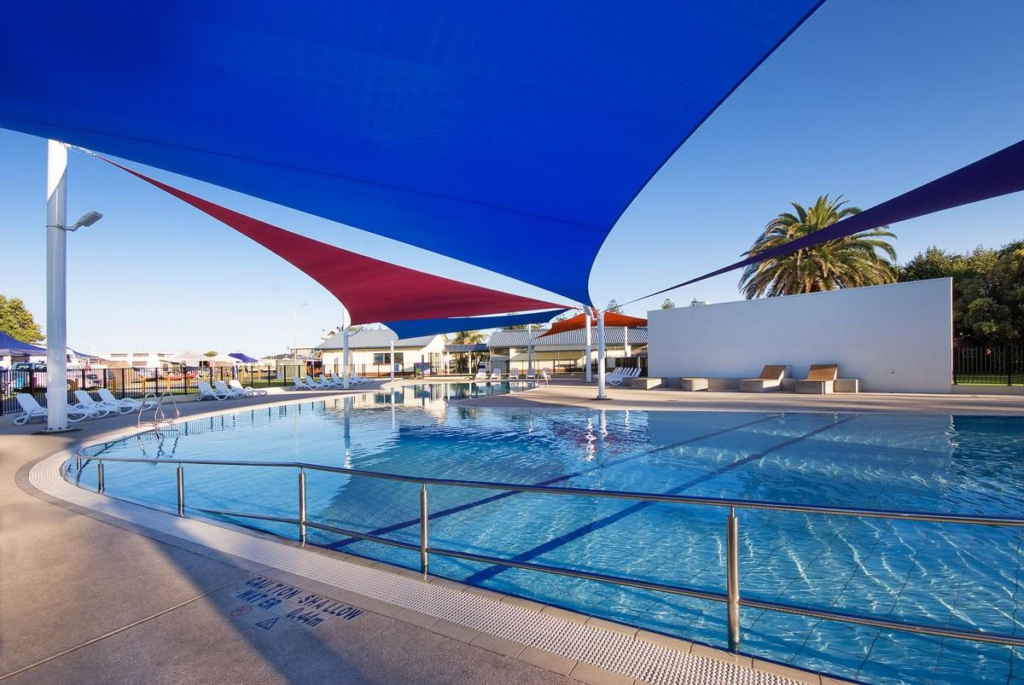
The key Advantages of Fixed Shade Sails:
- Flexible coverage: Triangular, rectangular, and other configurations can be arranged to suit different pool layouts.
- Modern appearance: Their simple geometric shapes complement contemporary homes, hotels, and resorts.
- Air circulation: Breathable HDPE shade fabric allows air to pass through, helping reduce heat buildup beneath the shade.
- UV protection: Shade sail fabric can block a substantial proportion of UV radiation, depending on its material and specification.
- Adaptable installation: Sails can be installed between posts, walls, or other suitable structural anchor points.
Young Shade Sail manufactures HDPE shade sails for outdoor applications, including swimming pools, patios, and commercial leisure spaces. Available options include different shapes, sizes, colors, and fabric specifications, allowing buyers to discuss products according to their project requirements. For distributors and project contractors, factory-direct supply can also support bulk purchasing and specification-based orders.
2. Retractable Shade Canopies: Flexible Sun Protection
A retractable shade canopy offers a different approach to outdoor sun protection. Instead of remaining permanently extended, the canopy can be opened or retracted according to the amount of shade required. This makes it particularly useful for poolside areas where sunlight changes throughout the day or where users want to enjoy both shaded and open-air conditions.
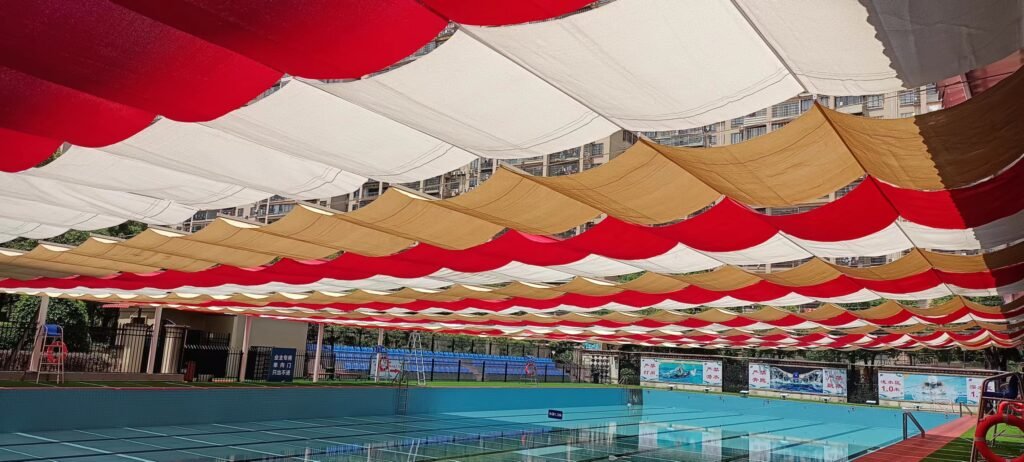
The key Advantages of Retractable Shade Canopies:
- Adjustable coverage: The canopy can be opened or closed according to sunlight and weather conditions.
- Flexible use: It can provide shade over poolside seating, dining areas, or selected sections of the pool.
- Open-air experience: Retracting the canopy allows the area to feel more spacious.
- Design options: Manual and motorized systems are available, depending on the project and budget.
Young Shade Sail supplies retractable shade canopy products for outdoor applications. Depending on the project, buyers can discuss fabric specifications, dimensions, colors, and system requirements. The company also provides retractable shade canopy selection tips covering practical considerations for choosing and using these systems.
3. Poolside Umbrellas: A Simple Solution for Smaller Areas
Poolside umbrellas are a straightforward way to provide shade over smaller areas. They are commonly used beside sun loungers, outdoor tables, and seating arrangements where a large permanent structure may not be necessary.
A traditional center-pole umbrella is often suitable for a table or compact seating area. A cantilever umbrella, on the other hand, places the supporting pole to the side, leaving more usable space beneath the canopy. This can be helpful when the shade needs to cover a lounge chair or table without a central obstruction
Their limitation is coverage. A single umbrella usually provides localized shade, so larger poolside spaces may require several umbrellas or a combination of different shade solutions. Wind conditions are also important. Umbrellas should be secured properly and closed or stored when conditions exceed their operating limits.
4. Pergolas: Architectural Shade for Poolside Living
Pergolas are permanent or semi-permanent structures that can define a dedicated poolside living area. They are commonly used above outdoor dining spaces, lounge areas, and patios adjacent to swimming pools.
A traditional pergola has an open or partially open roof structure. Its ability to provide shade depends on the spacing and orientation of the roof elements, as well as the position of the sun. To increase coverage, a pergola can be combined with fabric, adjustable louvers, or other shading materials.
The main considerations are installation cost, structural requirements, and the amount of permanent space occupied by the structure. A pergola is generally less flexible than a retractable canopy or umbrella, so its location should be planned around the pool layout and intended use.
5. Retractable Awnings: Shade Along the Poolside Building
Retractable awnings are a practical option when a swimming pool is located close to a house, hotel, or other building. Usually attached to a wall or suitable structural surface, an awning extends outward to provide shade over a patio, terrace, or poolside seating area.
Because the awning can be retracted, it offers flexibility without requiring a separate support structure across the entire shaded area. This can be useful for narrow poolside patios or outdoor spaces where permanent posts would interfere with movement.
However, the building itself becomes part of the shading system. The wall, mounting points, and supporting structure must be suitable for the awning installation. The available coverage is also limited by the projection and width of the system.
6. Natural Shade: Trees and Landscape Design
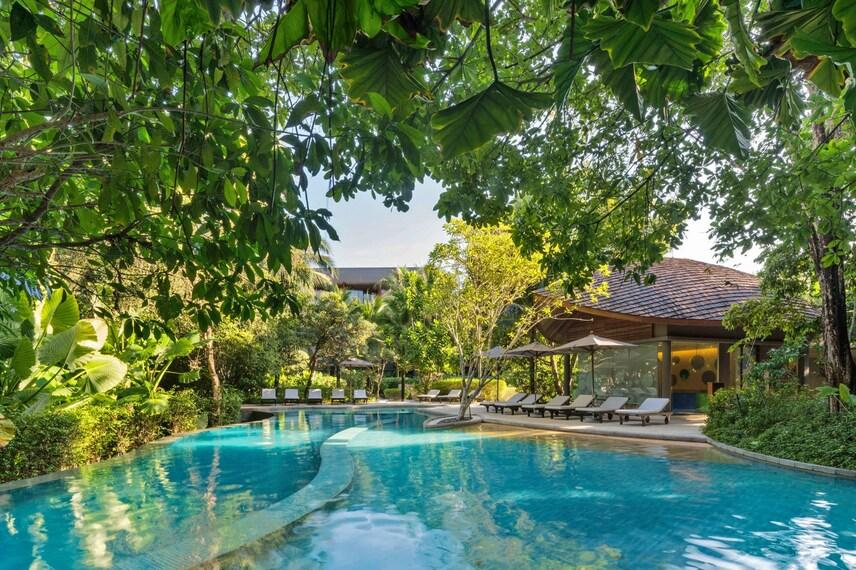
Trees and landscaping can provide natural shade while improving the visual quality of a poolside environment. Mature trees may create a comfortable shaded area and help integrate the swimming pool into the surrounding landscape. Natural shade is particularly useful in long-term landscape planning. It can complement architectural shade structures and create a more varied outdoor environment.
However, it is not always a practical immediate solution because trees take time to grow and their shade changes throughout the day and across seasons. There are also maintenance considerations. Leaves, seeds, branches, and other debris may fall into the pool, increasing cleaning requirements. Tree roots and the mature size of the canopy should also be considered when planning the pool.
For many projects, landscaping works best as a complementary feature rather than the only source of pool shade.
Pool Shade Options Compared
| Pool shade solution | Coverage | Flexibility | Common applications |
|---|
| Shade sails | Medium to large, depending on configuration | Usually fixed | Residential pools, resorts, commercial pool areas |
| Retractable Shade canopies | Medium to large | High | Residential and commercial poolside areas |
| Poolside umbrellas | Small to medium | High | Loungers, small seating areas |
| Pergolas | Small to medium | Depends on roof design | Patios, poolside dining, outdoor lounges |
| Retractable awnings | Small to medium | High | Poolside patios attached to buildings |
| Natural shade | Variable | Seasonal and dependent on growth | Landscaped residential and resort pools |
Part 2:How to Choose the Best Pool Shade for Your Space
The best pool shade depends on the pool’s layout, climate, intended use, and the amount of coverage required. Before selecting a design, consider the following factors.
1. Determine the Area That Needs Shade
Decide whether shade is required over the swimming pool itself, the surrounding deck, lounge chairs, or an outdoor dining area. A solution designed for poolside seating may not provide sufficient coverage for the water.
2. Consider Fixed or Retractable Coverage
Fixed shade sails and permanent structures provide consistent coverage in a designated area. Retractable canopies and awnings offer more flexibility when sunlight, views, or outdoor use changes throughout the day.
3. Select Fabric Based on the Application
Fabric selection affects UV protection, airflow, appearance, and maintenance.
- HDPE shade fabric: Commonly used for breathable shade sails and outdoor shade applications.
- Waterproof or water-resistant fabric: May be appropriate when rain protection is required, but drainage and water accumulation must be addressed.
- UV-stabilized fabric: Helps maintain performance during prolonged outdoor exposure.
4. Evaluate Wind Exposure and Structural Support
Pool shade structures are exposed to wind, and the forces acting on them depend on their size, shape, installation, and local conditions. Posts, anchor points, fittings, and foundations should be suitable for the intended application.
5. Match the Design to the Poolside Environment
Residential pools, hotels, resorts, and public facilities have different needs. A private backyard may prioritize appearance and ease of use, while a commercial project may require larger coverage, durable materials, and a design that supports regular maintenance.
Part 3: Which Supplier Specializes in Professional Pool Shade Solutions?
Young Shade Sail is a manufacturer and global supplier of outdoor shade products and agricultural netting. Its product range includes shade sails, shade fabric, retractable shade canopies, and other outdoor shade solutions for residential, commercial, and project-based applications.
The own factory uses computerized warp-knitting equipment, including German Karl Mayer machinery, to manufacture shade fabrics. Production capability is supported by quality-control equipment for evaluating fabric performance, including UV-related and physical testing. These capabilities help support consistent manufacturing for wholesale and project orders.
- Customized Specifications:Poolside projects vary in size, layout, and design requirements. Young Shade Sail supports customized shade sail and canopy specifications, including dimensions, shapes, colors, and fabric options, according to the product and project requirements.
- Factory-Direct Wholesale and Global Supply: For distributors, importers, and commercial buyers, reliable supply is as important as product performance. Young Shade Sail provides factory-direct wholesale supply and supports bulk orders for different outdoor shading applications.
- High-Performance Materials for Long-Term Outdoor Use: Young Shade Sail uses commercial-grade HDPE shade fabric designed for long-term outdoor exposure. The fabric provides strong UV resistance, excellent airflow, and reliable weather durability.
Conclusion
The popular pool shade ideas for 2027 combine practical sun protection with a design that fits the surrounding space. The right pool shade can make a swimming pool more comfortable and practical while enhancing the appearance of the surrounding outdoor space.
Young Shade Sail supplies shade sails, HDPE shade fabric, and retractable shade canopies for outdoor applications. For distributors, contractors, and project buyers, factory-direct supply and customized specifications can support different pool shade requirements. Contact Young Shade Sail to discuss pool shade products, fabric specifications, customized dimensions, and wholesale supply for your project.